Crypto Mining Registry in Russia Shrinks for the First Time: Who Is Leaving and Why
Two stories from one week describe Russian mining better than any report. First, the crypto mining registry in Russia shrank for the first time since its launch: in January-September 2026, 375 participants left and 365 joined. Second, the security service of the UAZ automotive plant in Ulyanovsk found a mining farm in a factory basement, reached through hatches hidden under metal sheets. The legal segment has stopped growing, the underground one has not gone anywhere. Below: the numbers, why miners quit, the bans, the registration and tax rules, and what it means for someone with a couple of ASICs in a garage.
Key takeaways
- The Federal Tax Service (FNS) registry, launched on November 1, 2024, had 1,473 members on October 1, 2026, ten fewer than at the start of the year.
- Sole proprietors are leaving (204 in, 254 out), companies are still joining (161 in, 121 out); 65% of exits were voluntary, none for anti-money-laundering violations.
- Individuals may mine without registration up to 6,000 kWh a month; mined coins are taxable income valued at the market quote on the day they are received.
- Two bills, fines up to 2 million rubles and a criminal article with up to five years in prison, passed first reading in spring 2026 and await second reading.
What the crypto mining registry in Russia shows
Companies and sole proprietors must register with the FNS to mine legally; individuals may mine without registration up to 6,000 kWh a month where mining is not banned. The January-September 2026 figures were compiled from FNS data by the consultancy Quattor Advisory.
| Indicator | January-September 2026 |
|---|---|
| Added to the registry | 365 |
| Removed | 375 |
| Members on October 1 | 1,473 |
| Of which sole proprietors | 819 (55.6%) |
| Of which companies | 654 (44.4%) |
| Removed since launch | 606 (416 sole proprietors, 190 companies) |
Minus ten in nine months is a small number, but the direction matters: until now the list only grew. The decline is driven by sole proprietors, minus 50 for the period, while companies added 40. Large miners stay, small ones leave. In February the FNS said over 5,000 participants had legalized mining, most of them individuals outside the registry, so the list covers only the business layer.
Why miners are leaving
Violations play almost no role. According to Quattor Advisory, 65% of those removed filed a voluntary notice of termination and another 32% closed their business altogether; the rest were removed for inaccurate corporate records or bankruptcy. Not a single removal was for breaching anti-money-laundering rules.
The reasons are economic. Gaik Martirosyan, managing partner at Quattor Advisory, says part of the miners are selling off equipment: small operators did not earn what they expected, costs remain high and hardware is aging. In February 2026, Bitcoin mining profitability fell to record lows on a cheaper coin and rising energy costs. Public miners with cheap power are struggling too, as we showed in Mining under pressure; a home farm on a retail tariff has it twice as hard. One caveat from the analysts: leaving the crypto mining registry in Russia does not cancel tax obligations on coins already mined.
A farm under the factory floor
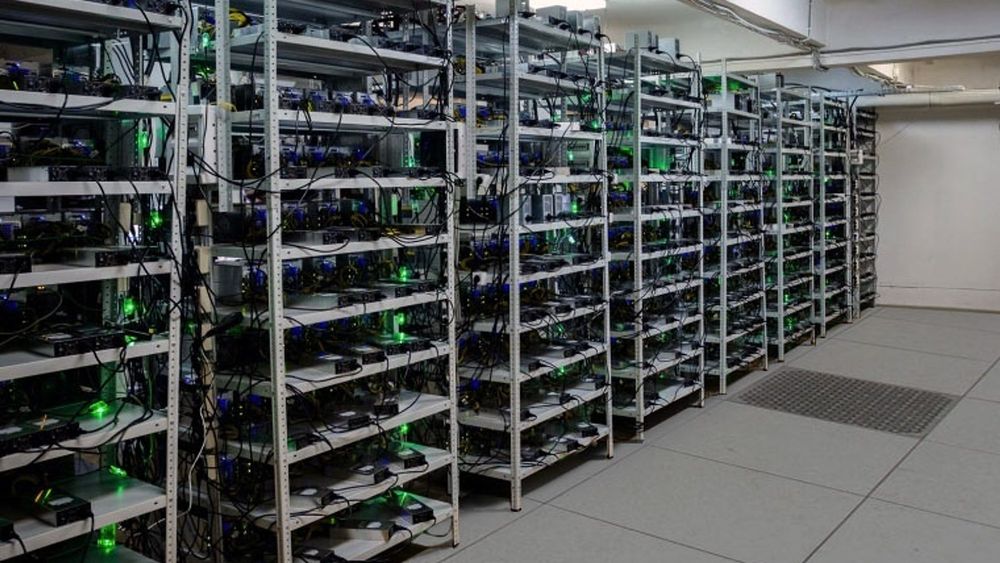
On October 13-14, UAZ security found a mining farm in the basement of the subsidiary UAZ Avtokomponent on Moskovskoye Highway in Ulyanovsk. The room was entered through hatches masked by metal sheets; the plant estimates the electricity consumed past the meter at more than 1 million rubles. The lead came by accident, from a police investigation into bicycle thefts; the equipment was seized.
Mining is not banned in the Ulyanovsk region, so the crime is electricity theft, not mining as such. That liability already works: in early October a court in Omsk sentenced four miners who had consumed 3.7 million kWh worth 12.3 million rubles bypassing the meters.
Regional bans until 2031
- A year-round ban until March 15, 2031 applies in 13 regions: the south of the Irkutsk region, six North Caucasus republics, the DNR, LNR, Zaporizhzhia and Kherson regions.
- Buryatia and Zabaykalsky Krai moved from a seasonal ban to a full one on April 1, 2026, also until March 15, 2031: 19 districts plus Ulan-Ude in Buryatia, and districts including Chita in Zabaykalsky Krai. The government cited an expected power deficit.
- Moscow and the Moscow region have their own rules, described in our piece on Russia's crypto mining ban reaching Moscow.
Key terms
- Mining registry is the FNS list of companies and sole proprietors allowed to mine digital currency in Russia, maintained since November 1, 2024.
- Digital currency is the legal term Russian law uses for cryptocurrency.
- Mining infrastructure operator is a company or sole proprietor that hosts other people's mining equipment and is listed in a separate FNS registry.
- 6,000 kWh threshold is the monthly electricity limit below which an individual may mine without registration.
- Market quote is the closing price on a foreign exchange, converted into rubles at the Central Bank rate, used to value mined coins for tax.
- Personal income tax (NDFL) is the tax individuals and sole proprietors pay on mining income at progressive rates from 13% to 22%.
Who must register and how
- Who. Sole proprietors and companies, including those mining in a pool. The right to mine arises only after inclusion in the registry. Individuals below 6,000 kWh a month do not register.
- How. Through the FNS online service, with documents signed by a qualified electronic signature. Review takes up to 15 working days with one possible suspension of up to 10 working days.
- Who is refused. Persons on extremist and terrorist lists, sole proprietors with unexpunged convictions for economic crimes, companies whose owners or head fail the business reputation test.
- Removal. On the miner's own application, in bankruptcy, for inaccurate corporate records, for repeated AML breaches and for mining in a banned territory.
- Reporting. Every miner, pool participants included, submits data on coins received and wallet addresses by the 20th of the following month; no report is needed for a month with no coins.
Operators of mining infrastructure
Hosting providers keep a separate registry entry, sign a contract with the grid company, may not serve unregistered clients, and report their clients quarterly by the 25th. Missing the deadline costs a 40,000-ruble fine under Article 129.16 of the Tax Code.
How mining income is taxed
- Recognition. Mined coins are income in kind, recognized on the day the miner gains the right to dispose of them; for continuous mining, daily.
- Valuation. Income is measured at the market quote: the closing price of a foreign exchange converted at the Central Bank rate.
- Individuals and sole proprietors pay personal income tax at progressive rates of 13-22%, since mining income joins the combined base with wages; a later sale is taxed at 13% up to 2.4 million rubles and 15% above. Residents may deduct documented mining expenses.
- Companies book mined coins as non-operating income and pay 25%; income and expenses from coin transactions sit in a separate tax base.
- Special regimes (simplified, agricultural, self-employed) cannot be used for mining.
- VAT does not apply to mining or to the sale of digital currency, but hosting and renting out capacity is an ordinary service and is subject to VAT.
Which data channels the tax service already uses, we described in Crypto tax reporting in Russia; rates and worked examples are in our guide to crypto tax in Russia in 2026.
Penalties: what applies now and what is pending
Today, mining without registration is not punished by itself. Two bills are meant to change that.
- Administrative fines (Article 15.50 of the Administrative Code) passed first reading on April 14, 2026: 100,000-150,000 rubles with equipment confiscation for citizens, 300,000-800,000 for officials, 1-2 million rubles for companies. On October 1 the Duma Council reassigned the bill to a new lead committee; the second reading is not yet scheduled.
- Article 171.6 of the Criminal Code passed first reading on May 27, 2026. It targets mining outside the registry with income or damage above 3.5 million rubles: a fine of up to 1.5 million rubles, up to 480 hours of community service or up to two years of forced labor; up to five years in prison for organized groups and especially large amounts. First-time offenders who repay the damage twice over are released from liability.
What this means for a home miner
- No registration while you stay under 6,000 kWh a month and outside banned regions; above that, you need sole proprietor status and an entry in the crypto mining registry in Russia.
- Tax applies anyway. Income arises when coins are received, not when they are sold, and documented expenses on hardware and power reduce the base.
- Electricity is the main risk. Every high-profile case this year is about stolen kilowatt-hours.
- Leaving does not erase the past. Coins mined before you sold the ASICs remain your income and your tax.
- Relocating equipment abroad has its own rules; see Kazakhstan's strategic mining program.
What is the crypto mining registry in Russia and who must be in it?
It is the FNS list of entities allowed to mine, kept since November 1, 2024. Companies and sole proprietors must be in it; individuals under 6,000 kWh a month outside banned regions do not register.
Why did the registry shrink if there were no violations?
Economics: 65% of those removed left voluntarily and 32% closed their business. Profitability fell, energy costs stayed, hardware aged.
If I leave the registry, do I still owe tax on earlier coins?
Yes. Leaving does not cancel tax on income already received; reports for past months must still be filed.
Where is mining banned completely?
Until March 15, 2031: the south of the Irkutsk region, six North Caucasus republics, the DNR, LNR, Zaporizhzhia and Kherson regions, and since April 1, 2026 most of Buryatia and Zabaykalsky Krai.
What does a miner risk by bypassing the meter?
A criminal case for electricity theft and seizure of equipment. The Omsk verdict for 3.7 million kWh and the farm under the UAZ plant are exactly about that.
Crypto markets expert and head of content and marketing at EIDEX. Covers market structure, exchange infrastructure and cross-chain trading - turning on-chain data and market shifts into clear, actionable research for traders.