Russia Cold Wallet Ban: What the Central Bank Actually Said About Self-Custody and P2P
On October 12, 2026, the Bank of Russia quietly published a page of questions and answers about the new digital currency law. Within three days the Russian press had boiled it down to one headline: the Russia cold wallet ban. The phrase is only half true. The regulator did say that an individual is not allowed to move digital currency from a licensed account to a non-custodial wallet. It did not say that owning a hardware wallet, or keeping coins bought years ago on one, is illegal. The same page sets a second deadline that matters more to most people: direct deals between individuals, the P2P market, remain legal only until July 1, 2027.
Key takeaways
- The Bank of Russia's Q&A, published October 12 and updated October 17, answers questions about Federal Law 282-FZ, which has been in force since September 1, 2026.
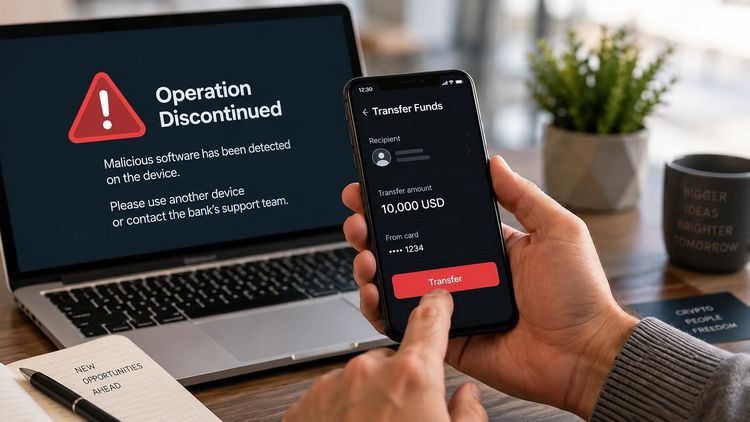
- Transfers from a "digital account" at a licensed depository to the same person's non-custodial wallet are "not allowed" under Part 9 of Article 31. Transfers between two individuals inside a depository are not allowed either (Part 5 of Article 31).
- P2P deals between individuals are permitted until July 1, 2027. From that date, Part 1 of Article 30 limits residents to deals made through or with licensed "organisers of digital currency circulation": brokers and exchange organisations.
- Nothing in the Q&A touches coins that already sit on a user's own device. The restriction is on the exit route from the regulated system, not on self-custody as such.
- Stablecoins have no legal definition in Russia; issuers' terms decide whether a token is treated as digital currency or as a foreign digital instrument, and the same rules apply either way.
What the Bank of Russia published
The Q&A sits on the regulator's cryptocurrency page and reads like a FAQ for brokers and banks rather than a press release. Four answers carry almost all of the weight:
- Where can digital currency be bought legally? From July 1, 2027, residents who are not themselves licensed organisers may transact only through or with such organisers. The law names brokers, which must hold a securities licence from the central bank, and exchange organisations, which must be entered in the regulator's register.
- Are P2P deals between individuals possible? Yes, but only until July 1, 2027. The list of deals allowed without an intermediary in Part 1 of Article 30 does not include direct deals between individuals after that date.
- Can an individual transfer digital currency from a digital account to their own non-custodial wallet? No. Under Part 9 of Article 31 a depository may execute a transfer only to an address administered by an organisation entitled to manage client wallets. A wallet controlled by its owner does not qualify.
- Can one individual transfer digital currency to another through depository addresses, for example after a deal between them? No, under Part 5 of Article 31.
Why the Russia cold wallet ban headline is only half right
Russian outlets from Kommersant to regional news networks ran the story as a flat ban on cold wallets. Read literally, the answer is narrower: coins that enter the licensed system through a digital account cannot leave it to an address the owner controls. The state wants to control the entry and exit points between rubles and crypto, and a self-custody address is where that control ends.
Three things remain outside the Q&A:
- Coins already held on a hardware or software wallet. The law recognises digital currency as property with judicial protection; nothing in the clarification orders anyone to move balances.
- Transfers between two self-custody addresses on a public blockchain, which the regulator cannot see, let alone stop.
- Coins held on foreign platforms, although from July 2027 a resident's deals with such an exchange fall outside the permitted list.
So the Russia cold wallet ban is real for one specific route: licensed account to own wallet. For everything else, the practical rule set is the one we described in our guide to how P2P trading works and in the breakdown of the law that took effect on September 1.
The date that matters more: July 1, 2027
The P2P deadline is the bigger change for ordinary users. Today most Russians who buy or sell crypto do it on P2P marketplaces, paying each other in rubles through bank transfers. The central bank's answer makes that model illegal for individuals from July 1, 2027: after that date a resident can buy, sell or swap digital currency only through a licensed broker or exchange organisation, or directly with one.
What the licensed route looks like is already defined in the law. Non-qualified investors may buy the most liquid digital currencies up to a limit of 300,000 rubles per year through a single intermediary and must pass a test first; qualified investors face no limit. Custody sits with digital depositories, and the central bank's register of exchange organisations already lists structures of the largest state banks together with about a dozen other companies, none of which offered a retail product as of mid-October. We looked at the first bank-run product in the piece on Sber's crypto wallet.
Stablecoins and foreign exchanges
Two further answers are easy to miss. First, Russian law has no definition of a stablecoin: market participants decide, based on the issuer's terms, whether a foreign stablecoin counts as digital currency or as a "foreign digital instrument", and the requirements of 282-FZ apply either way. Organised trading in stablecoins pegged one-to-one to an asset is allowed on Russian exchanges. Second, no foreign exchange is a permitted counterparty, because only entities in the regulator's register can organise circulation. That is the legal backdrop to foreign platforms tightening rules for Russian clients this autumn.
What holders should do before July 2027
- Leave coins on your own device alone: the clarification requires no action from people who already self-custody. If you are choosing a device, our review of hardware wallet security covers what can go wrong.
- Keep records of P2P deals while they are still legal: counterparties, amounts, bank references are your evidence of lawful acquisition if a bank or tax office asks later.
- Decide where new purchases will live. Coins bought through a licensed Russian intermediary stay inside the depository system, so that route suits trading rather than long-term cold storage.
- Do not count on the rules staying still: most of the detail is being introduced through the central bank's own acts, and the Q&A page was updated once in its first week.
Key terms
- Digital currency: the law's term for cryptocurrency; property under Russian law since September 1, 2026, protected in court.
- Digital account: an account opened by a licensed digital depository that holds a client's digital currency.
- Non-custodial wallet: a wallet whose private keys are held by the user, including hardware devices and software wallets.
- Organiser of digital currency circulation: a licensed intermediary, primarily a broker or an exchange organisation in the central bank's register, through which residents must transact from July 1, 2027.
- P2P deal: a direct purchase or sale of digital currency between two individuals without an intermediary; legal in Russia until July 1, 2027.
- 282-FZ: the federal law on digital currencies and digital rights, signed in July 2026 and in force since September 1, 2026.
Does the Russia cold wallet ban make it illegal to own a hardware wallet?
No. The answer concerns one transfer route: from a digital account at a licensed depository to the same person's non-custodial wallet. Owning a wallet and holding coins bought earlier is not addressed.
When do P2P crypto deals become illegal in Russia?
From July 1, 2027. Until then deals between individuals are permitted. After that date residents may transact only through or with licensed brokers and exchange organisations under Part 1 of Article 30 of 282-FZ.
Can I still use a foreign exchange from Russia?
The clarification does not mention foreign exchanges. They are not in the regulator's register, so from July 2027 deals with them fall outside the permitted list for residents, and several platforms have already started restricting Russian clients on their own.
Where is the original text?
On the Bank of Russia's cryptocurrency page in the question-and-answer section, with references to Articles 30 and 31 of Federal Law 282-FZ. The page was last updated on October 17, 2026 at the time of writing.
Crypto markets expert and head of content and marketing at EIDEX. Covers market structure, exchange infrastructure and cross-chain trading - turning on-chain data and market shifts into clear, actionable research for traders.