Crypto Tax Reporting in Russia: Seven Ways the State Learns About Your Coins
Crypto tax reporting in Russia used to rest on one thing: the holder's own honesty. That is changing fast. Licensed intermediaries now report to Rosfinmonitoring, the financial intelligence unit; miners report mined coins to the tax service; from May 2, 2027 residents will have to report operations through any wallet outside the regulated perimeter; and the Bank of Russia is drafting rules for bank certificates that include crypto. Below are the seven channels through which the state learns about your coins, what is already live, what is planned, and what a holder should do to avoid a three-year back-tax bill.
Key takeaways
- Since January 1, 2025, crypto is property for tax purposes in Russia. Gains on sale or swap are subject to personal income tax at 13% up to 2.4 million rubles a year and 15% above.
- Licensed intermediaries report transactions above 60,000 rubles (about $700) to Rosfinmonitoring, with the client's taxpayer number (INN).
- From May 2, 2027, residents must report operations made through wallets and foreign exchange accounts not run by a Russian digital depository.
- Miners have reported mined coins and wallet addresses to the tax service since 2025; mining hosting operators report their clients quarterly.
- Bank AML checks under law 115-FZ and Rosfinmonitoring's Transparent Blockchain tool already flag ruble flows linked to crypto.
Key terms
- FNS is Russia's Federal Tax Service.
- Rosfinmonitoring is Russia's financial intelligence unit, in charge of anti-money-laundering supervision.
- INN is the individual taxpayer number that now links crypto accounts, reports and tax returns.
- 3-NDFL is the annual personal income tax return that individuals file for income not withheld by an employer.
- Digital currency is the legal term Russian law uses for cryptocurrency.
- Digital depository is a licensed Russian custodian that keeps records of clients' crypto.
- Law 115-FZ is the anti-money-laundering law that governs how banks monitor customer transactions.
What is live and what is coming
| Date | What happens | Who is affected |
|---|---|---|
| January 1, 2025 | crypto becomes property for tax purposes; miners start reporting mined coins | all holders, miners |
| February 20, 2026 | Law 38-FZ: digital currency becomes property in criminal proceedings and can be seized or frozen | defendants in investigations |
| September 1, 2026 | crypto operations go through intermediaries from the Bank of Russia registry; INN is mandatory; 60,000 ruble reporting threshold | clients of depositories and exchangers |
| May 2, 2027 | report on operations through addresses outside Russian depositories | all residents |
| July 1, 2027 | end of the transition period; bank certificates include crypto holdings | market participants, civil servants |
The logic is consistent: the state first made crypto property, then gathered intermediaries into a registry, and is now building reporting for everything that stayed outside the perimeter.
What is taxed in the first place
Since January 1, 2025, cryptocurrency has been property for tax purposes, and the calculation rules are written into the Tax Code. Tax arises on disposal, not on holding: selling crypto for rubles or dollars, swapping one coin for another, or paying with it. Income from a sale is the difference between the sale price and documented purchase costs.
For individuals, gains on crypto sales are taxed at 13% up to 2.4 million rubles of annual profit and 15% above that. Mining income falls under the general progressive scale of 13% to 22%, and it arises when coins land at the miner's address, not when they are sold. Companies pay corporate profit tax. Crypto transactions are exempt from VAT.
One rule is specific to crypto: if you sell below 80% of the market quote on a foreign platform, income is still calculated from 80% of that quote. How to compute the base, apply FIFO and convert trades into rubles is covered in our guide to crypto tax in Russia. This article is about something else: where the tax authorities get their data.
Channel 1. Your own tax return
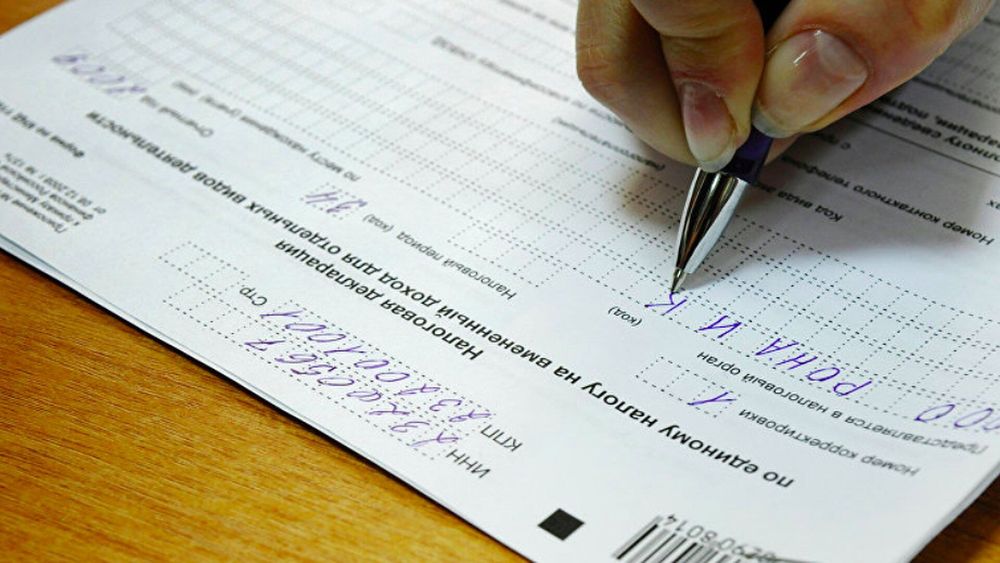
The most obvious source is you. An individual must file a 3-NDFL return for any year with income from selling crypto by April 30 of the following year and pay the tax by July 15. The return is filed through the taxpayer's online account with documents that prove purchase costs: exchange statements, contracts, screenshots of trades, receipts for P2P payments.
Without proof of costs, the tax office counts the entire sale amount as income. Keep statements for at least three years after filing, because that is the period the tax office can reassess. Each trade is converted into rubles at the rate on the day of the operation, and sales of the same coin are matched on a FIFO basis.
A common myth: "I never withdrew to a card, so there is no income." Income arises at the moment of sale or swap, not when rubles arrive. Swapping bitcoin for USDT is a disposal, and staking rewards count as income on the day they are received.
Channel 2. Licensed intermediaries and Rosfinmonitoring
Since September 1, 2026, crypto operations in Russia go through intermediaries listed in the Bank of Russia registry: digital depositories, exchangers and brokers. To open an account at a digital depository, a client must provide an INN; Rosfinmonitoring has called the taxpayer number the new mandatory identifier for the anti-money-laundering system.
Then comes intermediary reporting. Depositories and foreign financial organisations serving Russian residents pass data on transactions above 60,000 rubles to Rosfinmonitoring: full name or company name, date of birth, INN, blockchain address and physical address of both payer and recipient. The threshold is low enough to capture most ordinary trades.
Rosfinmonitoring is not the tax service, but the two agencies exchange data. If large regular operations run under one INN and no return is filed for that income, questions follow. We explain how a licensed account works in our guide on how to open a crypto account in Russia.
Channel 3. The May 2027 report on wallet operations
This is the change surrounded by the most confusion. Federal Law 283-FZ of August 4, 2026 added Article 12.1, "Reports on operations with digital currencies", to the currency control law. Opening a wallet without notifying anyone remains legal. But from May 2, 2027, residents will have to report to the tax authorities on operations made through address identifiers that are not administered by a digital depository from the Bank of Russia registry.
That definition covers almost everything holders use today: accounts on foreign exchanges, hardware devices, MetaMask, Trust Wallet and any other self-custody wallet. The report concerns operations, not the fact of ownership.
- Legal entities file reports with supporting documents.
- Individuals file reports without documents as a general rule. Those who spent more than 183 days outside Russia in the previous calendar year are exempt.
The form, deadline and frequency are to be set by the Government together with the Bank of Russia, and no draft exists yet, so there is nothing to file today and no penalty for not filing. From May 2027, however, the tax authorities gain a direct data channel on crypto held on foreign platforms that they have never had, and a mismatch between that report and a tax return becomes the simplest trigger for an audit.
Channel 4. Mining: the registry and reports on mined coins
For miners, the channel is already working. Since January 1, 2025, miners must report to the tax service the digital currency received from mining and the address it was sent to. The form is filed through the taxpayer's online account, and miners themselves are listed in a dedicated registry through the MiningRegistry service.
A second data stream comes from mining hosting operators: no later than the 25th day of the month after each quarter, they electronically report to the tax authorities on the clients who use their capacity. A tenant renting a rack in a data centre appears in the operator's report whether or not they filed their own.
Mining income arises when coins arrive and is valued at the market quote on that date. Selling the mined coins later is a separate taxable event.
Channel 5. Bank certificates for anti-corruption declarations
In late September 2026 the Bank of Russia published a draft instruction: from July 1, 2027, financial institutions must include in their account and deposit certificates information on a client's crypto and digital financial assets, income from their sale and mining results. These certificates are used for anti-corruption declarations filed by civil servants, members of parliament and their families, and employees of the central bank and state corporations.
The news spread under the headline "the central bank will make everyone declare crypto", but it is not a tax obligation for the general public. For an ordinary holder there is no direct consequence. What matters is the signal: the regulator expects banks to hold data on clients' crypto by mid-2027, which means the chain from intermediaries to certificates will be working by then.
Channel 6. Bank AML checks and Transparent Blockchain
Banks do not see crypto; they see the rubles that move when it is bought and sold. Regular incoming transfers from dozens of individuals, round sums and fast cash withdrawals are classic triggers for AML checks under law 115-FZ. A request for documents follows, and vague answers lead to restrictions on the account. People who sell crypto through P2P run into this most often.
A 115-FZ request is not an accusation but a standard procedure, and it is closed with documents: a statement from the platform where the crypto was bought, a contract or chat history with the buyer, last year's tax return.
Since 2025, banks have also had a tool for the crypto side. Rosfinmonitoring's Transparent Blockchain service analyses transactions and flags suspicious flows; by September 2026 more than 80 banks and over 12,000 users were connected. According to the agency, it helped uncover a network of illegal exchangers in Moscow City. An address that appears in such a chain raises questions for everyone who interacted with it.
Channel 7. Requests to exchanges and seizures
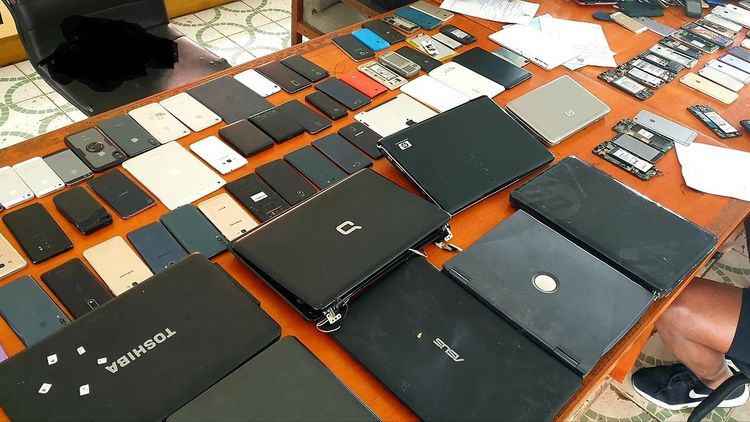
Foreign platforms hand over customer data on law enforcement requests: transaction histories and copies of documents. We covered a well-known case in our piece on what exchanges hand over in data requests. And since February 2026, Law 38-FZ has treated crypto as property in criminal proceedings, so it can be seized, frozen and confiscated. What happens to coins during a search is described in our article on crypto seizure in Russia.
For tax purposes this works indirectly: information obtained in a criminal case can be used by the tax office, and undeclared income becomes a separate episode.
How the tax authorities match the data
No single channel means an automatic reassessment. The power of crypto tax reporting in Russia is in matching. The key that links every source is the INN: it appears in intermediary reports, miner filings, Rosfinmonitoring data and your own return. If operations worth millions of rubles run under one INN and no return is filed, or the declared income is ten times smaller, the gap shows up in a routine desk audit.
The tax office then asks for explanations: where the rubles for the purchase came from, where the sale statement is, why declared income does not match incoming transfers. Documents close the question; silence turns it into a reassessment with penalties.
Penalties for staying silent
- Failure to file a return - a fine of 5% of the unpaid tax per month of delay, capped at 30% and no less than 1,000 rubles.
- Non-payment or underpayment - 20% of the arrears, 40% if intentional.
- Late-payment interest - charged for every day of delay.
- Criminal liability under Article 198 of the Criminal Code is possible for large arrears, from 2.7 million rubles over three consecutive years.
The limitation period for tax violations is three years, and a three-year reassessment is the typical outcome for people who traded but never declared.
What holders should do
- Keep records from the first trade. Date, ruble value at the day's rate, fees, where the coins came from and went. Export exchange histories regularly: a closed exchange will not provide them later.
- Declare income from sales and swaps. It is cheaper than any reassessment, and documented costs reduce the base.
- Separate wallets. Keep long-term holdings apart from trading addresses so that fund flows are easier to explain.
- Prepare for the 2027 report. List every address and account outside the Russian perimeter with operations on it: those fall under Article 12.1.
- Do not mix personal transfers and trading on one card. A separate account for crypto deals simplifies explanations under 115-FZ and in a tax audit.
- Answer requests with documents. Statements, contracts and chat histories with counterparties close most questions.
Crypto anonymity in Russia now rests only on the fact that the data channels are not yet connected into one system. By 2027 the regulator is connecting them one by one, and the strategy of "nobody will know" loses to the strategy of "declared and forgot".
Do I have to notify the tax office about my crypto wallet now?
No. There is no obligation to notify anyone about opening a wallet. The report on operations through addresses outside Russian depositories appears only from May 2, 2027, once the Government approves the form.
How does crypto tax reporting in Russia cover foreign exchanges?
Today, through law enforcement requests and through foreign organisations' reports to Rosfinmonitoring on transactions above 60,000 rubles. From May 2, 2027, your own report on operations through such accounts is added.
Is swapping one cryptocurrency for another taxable?
Yes. A swap is a disposal, and income arises at the moment of the trade even if no rubles are received.
Does the tax office know about crypto on a hardware wallet?
Today only if the address appeared in intermediary reports, mining operator filings or an investigation. From May 2, 2027, operations through such wallets must be included in your own report.
Do I have to declare crypto that I simply hold?
No. Until the coins are sold or swapped there is no income and nothing to declare. The obligation arises on disposal, and from 2027 on reporting operations if there were any.
I hold a Russian passport but live abroad. Does this apply to me?
If you spent more than 183 days outside Russia in the previous year, you do not file the individual report on wallet operations. Personal income tax obligations depend on tax residency and are assessed separately.
Crypto markets expert and head of content and marketing at EIDEX. Covers market structure, exchange infrastructure and cross-chain trading - turning on-chain data and market shifts into clear, actionable research for traders.