Russia Crypto Law Takes Effect September 1: What Changes for Exchanges, Retail and Self-Custody
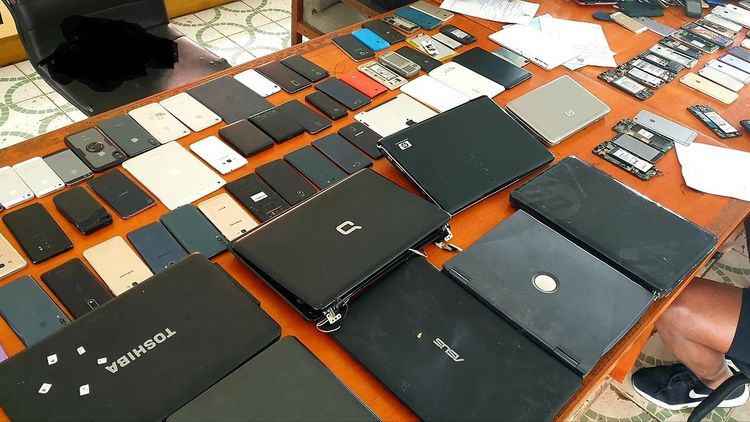
On the evening of August 13, law enforcement raided Gorbushka, a Moscow shopping complex, in a case involving crypto exchange desks. Officers seized cash, documents and hardware. The owner of one desk operating there, Bogdan Ageev of Ageev Finance, linked the raid to a deadline: the Russia crypto law was weeks away from taking effect, and the checks targeted unofficial operators. His own business was untouched, he said, because it is already going through legalisation.
That is a useful way to read what happens on September 1. The statute is dry. The enforcement around it is not.
What the Russia crypto law actually establishes
The law on digital currency and digital rights was passed by the State Duma on July 21, drafted by the Central Bank, and takes effect on September 1. It is the country's first comprehensive framework for the market, defining the status of exchanges, brokers, depositories, management companies and, for the first time, exchange desks.
The core idea is containment rather than prohibition. Circulation of crypto is pushed into a perimeter of authorised intermediaries, and everything outside that perimeter is gradually moved out of the legal field. "Gradually" is the operative word: a transition period runs until July 1, 2027. Only from that date are transactions by residents outside authorised venues explicitly banned, and only then are banks required to refuse payments to unauthorised recipients.
What the law does not do
Two carve-outs deserve stating plainly. Crypto does not become a means of payment - goods and services cannot be priced in it, with an exception for foreign trade contracts. And ownership is not cancelled: holdings remain property, with rules attached to how they move.
What a licensed exchange desk will look like
Exchange desks get their own status as organisers of digital currency circulation, and they can only operate through a dedicated registry. As RBC's legal review sets out, the requirements are heavy for a sector that historically ran on a laptop and a cash drawer.
Entry starts at 15 million rubles of own funds, roughly $190,000 at the rate implied by the Central Bank's own conversions. On top of that: internal control rules with a dedicated officer, requirements for the director and the accounting function, segregation of client money from company money, information security standards, primary and backup software hosted inside Russia, and ten years of transaction record retention.
The threshold that defines the activity is low. Two or more deals a month totalling more than 3.5 million rubles, about $45,000, already count as exchange business - cross it and registry membership becomes mandatory.
The one genuinely new protection
Anti-fraud systems become mandatory, and if checks were violated and a criminal case is opened, the service must compensate the client for stolen crypto within 30 days. Yuri Brisov of Digital Analogue Partners called it the first compensation mechanism Russian crypto users have ever had.
Lawyers doubt the market can absorb this. "No existing player in Russia holds exchanger status, and none can somehow obtain it or convert into it," said Andrey Tugarin, founder of GMT Legal, pointing out that unlike exchanges and depositories, which already exist in Russian law, exchange desks are being created from scratch.
What retail investors can buy, and how much
Access opens after testing, for qualified and unqualified investors alike. For the unqualified category, two limits apply.
The first is the asset list. Only coins admitted to the Central Bank's register are available, and the criteria are steep: average capitalisation above 5 trillion rubles (around $63.8 billion) over two years, and average daily trading volume of at least 1 trillion rubles (around $12.7 billion) over the same period. Today that means Bitcoin, Ethereum and Tether's USDT.
The second is size: no more than 300,000 rubles a year, roughly $3,800, through any single intermediary. The same cap applies at exchange desks, and breaching it exposes the service to administrative liability. Qualified investors have no ceiling.
Organised trading stays with venues holding the relevant licence. As of March 31, the Central Bank counted eight such organisations, including the Moscow Exchange and the SPB Exchange. Brokers will route client orders to those venues, and management companies will be allowed to manage crypto on clients' behalf.
Digital depositories: custody with a freeze button
The domestic perimeter is built around digital depositories that store and account for residents' holdings. They work much like banks' custody services: they have access to the assets and can block them under anti-money-laundering rules. In an exchange transaction, the user's address identifier sits inside the depository - coins leave from it and return to it.
Two exclusions matter for anyone reading this from outside the country. Holding assets in a non-custodial wallet abroad is not prohibited, and operations inside blockchain services do not fall under the regulation at all. DeFi and self-custodied wallets simply sit outside the model - along with the protections the model creates. Residents also keep the ability to buy crypto abroad from foreign accounts, and to send crypto purchased domestically overseas through Russian intermediaries.
The Russia crypto law and taxes
For tax purposes, crypto is property. Individuals and sole traders pay personal income tax on gains, companies pay profit tax, and neither trading nor mining attracts VAT. Individuals file the standard 3-NDFL declaration, companies report under their chosen tax regime, and residents must notify the tax service about operations conducted abroad.
Converting crypto to rubles through an authorised intermediary requires full identification, and information on operations above 100,000 rubles, about $1,300, is passed to Rosfinmonitoring, the financial intelligence unit. Identification has a second edge: databases that tie income to a name and a home address leak and get resold.
The cliff is July 1, 2027
Until then, an individual faces no liability for transacting outside the registry. The risks are practical rather than legal.
Money is the first one. When a grey exchange desk is raided, hardware and cash are seized and pending client orders freeze in place - there is no contract and no segregation of client funds to point at.
Provenance is the second. A service with no mandatory screening can hand over coins connected to someone else's crime. Licensed operators must run AML checks, and that obligation is what makes the 30-day compensation mechanism enforceable.
Timing is the third. Parliament is separately working on criminal penalties for illegal crypto exchange. Anatoly Aksakov, who chairs the State Duma's financial market committee, framed the test simply: turnover without the participation of institutions licensed by the Central Bank is illegal turnover. And from July 1, 2027, a bank will decline a transfer to a service that is not in the registry.
Why this matters outside Russia
Russia is not the first jurisdiction to route crypto through licensed intermediaries, but the design is unusually complete: a closed custody layer with a freeze capability, an approved-asset list keyed to market capitalisation, a hard cap on retail exposure, and a dated deadline after which banks become the enforcement mechanism.
The pressure is also arriving from the opposite direction: Binance is cutting off 16 sanctioned services used by the same audience, with most cut-offs landing on August 23. For exchanges serving Russian users, the practical question is not September 1 but whether a registered local entity is worth building before 2027. For users, the honest summary is that the Russia crypto law changed the cost of anonymity. It used to be paid in spread. Now it is paid in the risk of having no counterparty to call.
FAQ
Does the Russia crypto law ban cryptocurrency?
No. It does not prohibit ownership and does not invalidate existing holdings. It defines who may intermediate transactions and imposes liability on services operating outside the registry.
Can Russians still use foreign exchanges?
Until July 1, 2027, nothing changes in practice. After that date, transactions outside authorised intermediaries are banned and banks must refuse payments to such platforms, unless the platform operates in the country through a registered subsidiary.
How much crypto can an unqualified investor buy?
Up to 300,000 rubles a year, roughly $3,800, through a single intermediary, and only assets on the Central Bank's approved list - currently Bitcoin, Ethereum and USDT.
Is self-custody still legal under the new rules?
Yes. Holding assets in a non-custodial wallet abroad is not prohibited, and on-chain activity inside blockchain services is not covered. It is also outside the compensation and dispute mechanisms the law creates.
Can crypto be used for payments?
No. The ruble remains the only means of payment, with an exception for settlements under foreign trade contracts.
When does the Russia crypto law fully come into force?
The main provisions start on September 1, 2026. The transition period runs to July 1, 2027, after which transactions outside licensed intermediaries are banned and banks must block payments to unregistered services
Crypto markets expert and head of content and marketing at EIDEX. Covers market structure, exchange infrastructure and cross-chain trading - turning on-chain data and market shifts into clear, actionable research for traders.