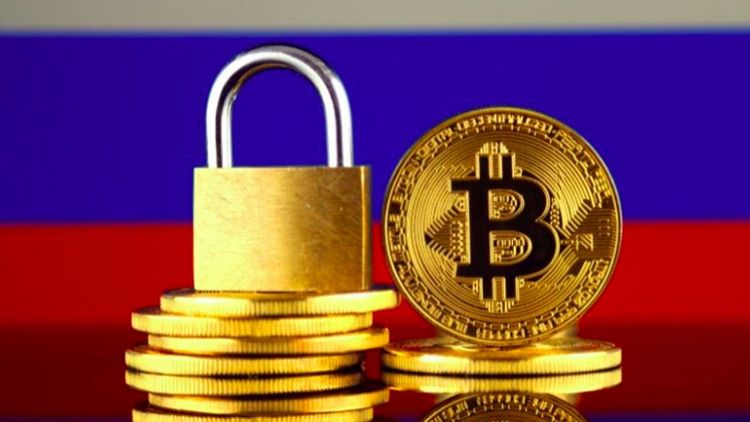

EUR to USDT in Europe: What Changed on July 1, 2026
If you tried to buy USDT with euros on a European exchange this summer and the pair had vanished, nothing broke on your end. The transitional period under the EU crypto regulation ended on July 1, 2026, and licensed venues across the European Economic Area stopped offering Tether's dollar token.
The demand did not go anywhere - EUR to USDT is still one of the most searched conversions in Europe. This is what actually changed, what remains legal, and which EUR to USDT routes still function.
What the rule says
The EU crypto-asset regulation, MiCA, entered into force in June 2023 and phased in over three years. Two dates matter here.
Stablecoin provisions applied from June 30, 2024. Rules for crypto-asset service providers followed on December 30, 2024, restricting authorised firms from offering stablecoins whose issuers lack authorisation. The EU-wide transitional window then ran until July 1, 2026.
From that date, a venue holding a MiCA licence cannot offer trading in an e-money token whose issuer is not authorised in the EU. Tether never applied for that authorisation, objecting among other things to the reserve requirements. The result was mechanical rather than punitive: the token stayed the same, the licence conditions did not permit listing it.
Who removed what, and when
- Coinbase ended USDT support for EEA customers on March 31, 2025
- Kraken and Crypto.com removed USDT pairs for European users
- Binance applied geofencing to USDT pairs for EEA accounts
By July 2026 the practical outcome was uniform: no MiCA-licensed exchange in the EEA offers a EUR to USDT pair.
What is still legal for you
This is the part that gets misreported, so it is worth stating precisely.
Permitted: holding USDT in a self-custody wallet, receiving it, sending it, transacting on decentralised exchanges, and using it in DeFi protocols. MiCA regulates service providers, not what a private individual holds in their own wallet.
Not available: buying, selling or holding USDT through a MiCA-authorised centralised service in the EEA. That is a restriction on the licensed venue, not a prohibition aimed at you.
The distinction is between the regulated perimeter and the asset. The perimeter shrank; the asset is unchanged.
The routes that still work
Non-custodial swap services. You send euros through a supported payment method or arrive with another crypto asset, and receive USDT to your own wallet address without an account balance ever existing. These services sit outside the licensed-exchange perimeter, and each has its own jurisdictional footprint - the terms are worth reading rather than assuming.
The USDC bridge. Buy USDC on a regulated European platform with euros, then swap USDC to USDT wherever you prefer. Two steps, two spreads, and the first leg is fully inside the regulated perimeter.
Peer-to-peer. Direct counterparty trades with escrow. Widely used, and the one route where counterparty diligence is entirely on you.
Non-EEA venues. Available in practice, but check whether the platform accepts European residents before moving funds, not after.
Comparing these by hand is the tedious part, and the spread between the best and worst quote on the same amount is routinely larger than any fee line. A swap route comparison puts every available rate side by side with fees shown before you commit.
Why USDC took the market
Circle obtained e-money token authorisation, so USDC remained listable on licensed European venues. Trading volume followed the licence, not user preference.
The practical read for anyone in Europe: if your euros need to become a dollar stablecoin and you want the whole path inside the regulated perimeter, USDC is the instrument the rules point you to. If you specifically need USDT - because a counterparty, an exchange outside Europe or a payment recipient requires it - you are looking at a two-step route rather than a direct EUR to USDT purchase.
Costs to count before you start
| Item | Where it hides |
|---|---|
| Spread | The quoted rate versus mid-market, largest single cost on thin routes |
| Payment fee | Card and SEPA rails price very differently |
| Network fee | TRC20 and BEP20 are cheap, ERC20 is not |
| Second-leg spread | Only on the USDC bridge, easy to forget |
On the network choice: USDT exists on several chains, and they are not interchangeable. Sending to an address on the wrong network is the most common way funds are lost in this flow. If the difference between formats is not obvious, the BEP20 explainer covers it.
What this means in practice
Three consequences worth internalising.
- Direct EUR to USDT on a European licensed exchange is gone. No workaround inside that perimeter, because the constraint is on the venue's licence.
- Self-custody is untouched. What you already hold, and what you receive to your own wallet, is unaffected.
- The cost of the same operation went up. Two-step routes carry two spreads, and non-custodial services price convenience.
None of this is a judgement about whether the rules are sensible. It is what the licence conditions produce, and Europe is the first large market to run the experiment at scale.
A checklist before your first swap
Six checks that cover most of what goes wrong on a EUR to USDT route.
- Confirm the destination network. Chains are not interchangeable, and a wrong-network transfer is usually unrecoverable.
- Compare at least three quotes on your real amount. Spreads widen sharply below a few hundred euros.
- Check whether the service accepts your residency before funding, not after.
- Read the refund terms. Non-custodial services need a return address if a swap fails or the rate moves outside the quoted band.
- Note the limits. Payment rails and swap services both cap size, and the caps rarely match.
- Send a small test first with any new counterparty.
How Europe compares
Europe is the first large market to apply a full licensing regime to stablecoins, so the EUR to USDT situation has no direct equivalent elsewhere yet.
In the United States, stablecoin rules developed around issuer requirements rather than venue listing conditions, so dollar tokens remain broadly tradable on regulated platforms. Across most of Asia the constraint is the fiat on-ramp - banking access rather than the token itself. In Latin America and parts of Africa, dollar stablecoins function as a savings instrument and regulation has mostly followed adoption instead of shaping it.
That contrast explains something that confuses European users: guidance written for other markets simply does not describe what a licensed EEA venue is allowed to offer. When you read that a given exchange "supports USDT", check whether that statement covers the European entity or the global one - they now differ.
Is USDT banned in the EU?
No. Holding, sending and receiving it in self-custody is legal, as is using it on decentralised protocols. What is not permitted is offering it through a MiCA-authorised service provider in the EEA.
Can I still buy USDT with euros?
Not on a MiCA-licensed exchange in the EEA. Non-custodial swap services, peer-to-peer trades and the USDC bridge remain available.
What happened to USDT I already hold?
Nothing. Assets in a self-custody wallet are unaffected by the licence conditions of exchanges.
Why did Tether not apply for authorisation?
The issuer objected publicly to MiCA's requirements, including the reserve rules for e-money tokens. Without that authorisation, licensed venues cannot list the token.
Is USDC a full replacement?
For trading inside the regulated perimeter, yes - it holds the relevant authorisation. For paying a counterparty who specifically wants USDT, no, and that is where the two-step route comes in.
Which network should I use for the USDT leg?
The one your destination supports. Confirm on the receiving side before sending, because chains are not interchangeable and a wrong-network transfer is usually unrecoverable.
Crypto markets expert and head of content and marketing at EIDEX. Covers market structure, exchange infrastructure and cross-chain trading - turning on-chain data and market shifts into clear, actionable research for traders.