Crypto Seizure in Russia: How the Law Works and How Officers Allegedly Extorted $4M
Crypto seizure in Russia now has a clear legal procedure, and a court case shows where that procedure can be abused. In September 2026 the Moscow Garrison Military Court began hearing the case of two former officers of the FSB's Kaliningrad directorate. According to investigators, they received cryptocurrency worth more than 350 million rubles (about $4.1 million) for returning devices taken in a search and for a promise not to prosecute their owner. The defendants deny the charges and say they were framed. Below is what happened, how the 2026 law works and what to do if crypto becomes part of a search.
Key takeaways
- Since Federal Law No. 38-FZ of February 20, 2026, cryptocurrency is property for the purposes of Russia's Criminal Code and Criminal Procedure Code.
- Investigators can take storage devices or access codes, move coins to an address they control, or ask a court to freeze assets, including funds held on an exchange.
- An arrest is a temporary freeze; confiscation is a final transfer to the state after a guilty verdict.
- Every action with keys and every transfer must be recorded in the search protocol.
- An offer to "settle the matter" for money is a sign of extortion, not a legal procedure.
Key terms
- Seizure is an investigative action in which property, including devices holding crypto keys, is taken from its owner.
- Digital currency is the legal term Russian law uses for cryptocurrency.
- Search protocol is the official record of a search that lists every item taken and every action performed.
What happened in the Kaliningrad case
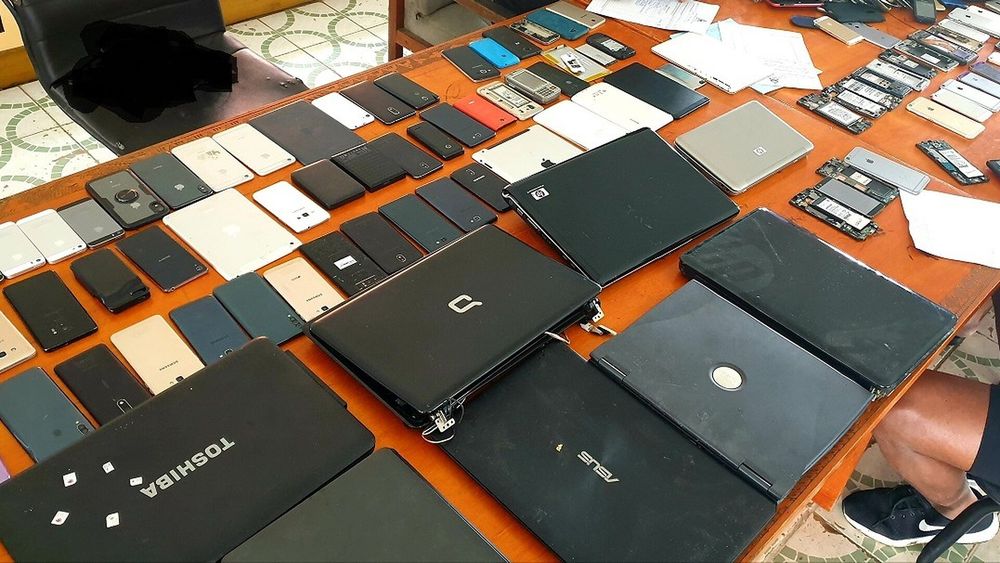
According to the case materials reported by Kommersant, in March 2024 Russia's Investigative Committee opened a criminal case on unauthorised access to computer information against an entrepreneur. It was based on materials from the unit where Lieutenant Colonel Dmitry Baburin served. A search at a witness's home was led by Colonel Nikolai Antonov, and the witness's laptop and phone were taken.
An acquaintance of the witness asked Baburin for help. According to the prosecution, Baburin named a price of 300 million rubles (about $3.6 million), threatened the witness with prosecution if he refused, and promised Antonov 40 million rubles. The devices were carried out of the directorate's building and returned to their owner. The first crypto transfer, investigators say, went through on the night of April 10, 2024.
The officers are charged with taking a bribe on an especially large scale (Part 6 of Article 290 of the Criminal Code) and abuse of authority by a group acting in collusion (Part 3 of Article 286). There is no verdict: the court has only begun to examine the case.
What the 2026 law changed
For years the status of crypto in criminal proceedings was vague. In 2019 the plenum of Russia's Supreme Court clarified that money-laundering rules also cover funds obtained by selling cryptocurrency, but there was no single procedure for taking such assets and holding them until a verdict. A seized USB stick with keys guaranteed nothing: the owner or accomplices could restore the wallet from a seed phrase and move the coins while the device sat in an evidence room.
Federal Law No. 38-FZ, signed on February 20, 2026, recognised digital currency as property for the Criminal Code and the Criminal Procedure Code. It can now be seized, frozen and turned over to the state. A new Article 164.2 of the Criminal Procedure Code sets out how digital currency is seized during investigative actions, and Article 104.1 of the Criminal Code on confiscation now explicitly applies to crypto assets. The tools are available to investigators from the Investigative Committee, the Interior Ministry (MVD) and the FSB.
How crypto seizure in Russia works during a search
The law lets investigators choose a method depending on where and how the coins are stored.
- Keys on a USB stick, laptop, phone or paper. Investigators can seize the device itself or the access codes. A seed phrase written on paper counts as a storage medium just like a USB stick.
- Transfer to an investigators' address. To stop accomplices from moving the assets, the coins are transferred to a special address controlled by law enforcement. The transaction details go into the protocol, so the movement is visible on the blockchain.
- Coins on an exchange, or a transfer is impossible. A court can impose an arrest, and the owner loses the ability to make any transactions.
The protocol is what matters most. Every action with keys and every transfer must be reflected in it. If crypto was taken without a protocol, or with blank fields left in it, that is grounds for a complaint rather than a formality.
Arrest vs confiscation: what is the difference?
The two measures are often confused, but their consequences differ.
- Arrest is a temporary, court-ordered ban on disposing of property, and if necessary on using it (Article 115 of the Criminal Procedure Code). It keeps assets in place until the case is decided and is lifted once it is no longer needed.
- Confiscation is the final, compulsory and uncompensated transfer of property to the state (Article 104.1 of the Criminal Code). Only a guilty verdict can trigger it.
In practice, an arrest on an exchange account looks like a full freeze: the balance is visible, but you can neither sell nor withdraw. We described how such freezes are challenged in our piece on exchange account freezes.
Where extortion creeps in
The weak spot is the gap between the search and the formal paperwork. The owner of the crypto cannot see what is happening to the seized devices, does not know whether anyone has accessed the wallet, and fears losing everything. That fear is what a "settle the matter" offer exploits: return the devices or drop the prosecution in exchange for money.
If the charges are proven, the Kaliningrad case is exactly that scenario. Any offer to pay for "closing the issue" should be treated as extortion and reported to the prosecutor's office or to the agency's internal security department.
What this means for ordinary crypto holders
The new rules do not ban buying or holding crypto: crypto seizure in Russia is tied to criminal proceedings, and the law governs what investigators can do, not a person's right to own digital assets. We explain what holders are allowed to do in our guide on whether crypto is legal in Russia.
Your assets can still come under scrutiny even if you are only a witness, as in the Kaliningrad case. Keep your trade history and proof of where your funds came from - statements, contracts, screenshots of transactions. They make it much easier to show that your coins have nothing to do with a crime.
What to do if crypto becomes part of a search
- Ask to see the search warrant and read it carefully: who is conducting the search and on what grounds.
- Use your right to a lawyer. You can call one immediately.
- Check the protocol. It must list every device taken and, if assets were transferred, the addresses and amounts.
- Add your objections. If anything is recorded incorrectly, write it into the protocol before signing.
- Never pay to "settle the matter". A lawful procedure involves no informal deals.
This article is for information only and is not legal advice.
Is crypto seizure in Russia legal?
Yes. Since February 2026, Federal Law No. 38-FZ explicitly allows investigators to seize devices holding crypto keys, move coins to an address controlled by the investigation, and ask a court to freeze crypto assets, including those on exchanges.
What happens to seized crypto after a verdict?
After a guilty verdict it can be confiscated and transferred to the state. If the person is acquitted or the measure is no longer needed, the arrest is lifted and the assets are returned.
Can police freeze crypto held on a foreign exchange?
A Russian court can order an arrest, but whether it can be enforced depends on the exchange's cooperation. For coins held in a wallet, investigators rely on seizing the device or the access codes.
Can I hide crypto from investigators?
An attempt to hide or move frozen assets can itself become grounds for new charges. It is safer to challenge investigators' actions through a lawyer.
Crypto markets expert and head of content and marketing at EIDEX. Covers market structure, exchange infrastructure and cross-chain trading - turning on-chain data and market shifts into clear, actionable research for traders.