USDT in Russia: Ruble Exchange and the New Rules
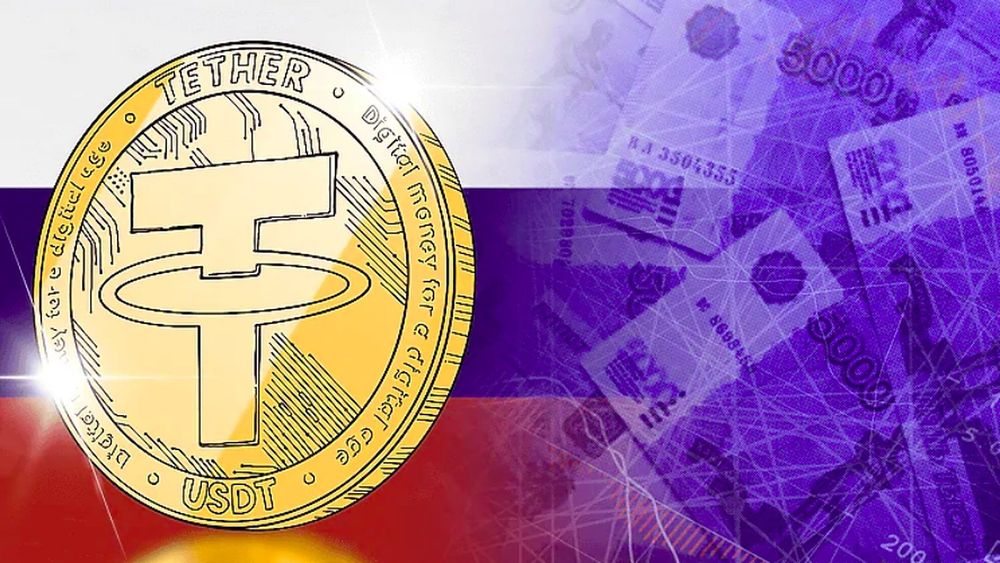
For a Russian trader this stablecoin replaced the dollar long ago. Once the largest venues dropped deposits through domestic banks and pairs with the ruble, it became the unit of account: profits are counted in it, balances sit in it between trades, and it is how people get in and out.
On September 1 the rules change. Below: what happens to ruble exchange, whether the token makes the Bank of Russia white list, what a withdrawal to a card actually costs, and which risks around USDT in Russia already exist before the law takes effect.
What the token is and why everything is counted in it
Tether has issued it since 2014. Capitalisation is around $184 billion, and it is the main trading unit on most global venues.
It is not only speculators who use it: in countries with limited access to banking, the stablecoin works as a substitute for a dollar account. Russian conditions added another function, a settlement one. Hence the habit of measuring a portfolio in tokens rather than in rubles, and the sensitivity of any question about what comes next.
What changes for USDT in Russia on September 1
On July 21 the State Duma passed the law on digital currency and digital rights. The main provisions take effect on September 1, 2026.
Five categories of participants
The document introduces five types of regulated organisations: exchanges, brokers, management companies, depositories and exchange desks. It also defines who may transact and on what terms. Exchanging becomes a licensed activity rather than a grey zone for the first time.
The transition period to July 2027
The market has a window until July 1, 2027. After that date transactions may only go through regulated organisations, and banks will be required to refuse everything else.
The key question for a holder is simple: will USDT make the list of assets admitted to circulation inside the country?
Will the token make the white list
The Bank of Russia requirements
The bar is high. Average capitalisation over two years must exceed 5 trillion rubles, roughly $64 billion. Average daily trading volume must exceed 1 trillion rubles, about $12 billion. On top of that, at least five years of public price history on a foreign venue with turnover from 100 billion rubles.
According to CoinMarketCap data at the end of July, four assets meet those conditions: bitcoin, Ethereum, USDT and USDC from the American company Circle. But no specific names are written into the law, and public statements by the regulator and by ministries diverge.
The position of the regulator and the finance ministry
The caution is understandable. The Bank of Russia has repeatedly called dollar tokens vulnerable: the issuer sits in an unfriendly jurisdiction and is technically able to halt operations on an address.
In early June the finance ministry said admission of such assets was under discussion, and that investor protection mechanisms were being worked out in parallel. Deputy minister Ivan Chebeskov spoke both about technical measures and about economic incentives, such as fees or recommendations that would nudge citizens toward other instruments.
Put simply: the stablecoin has a chance of making the list, but the authorities would prefer it to be used less.
What this looks like for a holder
Lawyers suggest separating two circuits. Denis Polyakov, head of the digital economy practice at GMT Legal, explains that everything depends on whether the regulator puts the asset on the white list.
The domestic circuit
If it does, a non-qualified investor will be able to transact within a limit. The reference figure is 300,000 rubles a year through a single intermediary, and the same cap applies at exchange desks.
Foreign venues and your own wallet
If the asset sits on a foreign exchange or in a non-custodial wallet, you can do anything with it except one thing: buy and sell it for rubles. Those operations are allowed only through licensed Russian intermediaries.
In other words, nobody is taking the wallet away and circulation is not banned. What is regulated is the point where the token turns into money on a card, and that is exactly the point most users care about.
How it differs from USDC and the digital ruble
There is more confusion in the terms than it seems, and understanding the rules depends on it.
USDT and USDC are private tokens pegged to the dollar and backed by issuer reserves. Both circulate on the open crypto market, and both have a company that answers for issuance and can restrict a specific address.
The digital ruble is a third form of the national currency, issued by the Bank of Russia. It is not a cryptocurrency: the issuer is the state, issuance is centralised, and circulation happens only inside the regulator's infrastructure.
Digital financial assets are yet another entity. They are issued within Russian information systems and have no relation to the global market.
Where people exchange it for rubles
There are three routes, each with its own price.
Exchange desks
The fastest one: the rate is fixed when the request is placed and the money lands on a card. The fee is built into the rate, so what you compare is not the advertised percentage but the final amount you receive. From September this segment changes the most, since exchange desks get a separate status for the first time and must join a register.
Trading venues with a ruble pair
The rate here is closer to the market, but you need an account, verification and an understanding of how to withdraw fiat. On larger amounts the difference in rate outweighs the hassle of registering.
P2P deals
Formally you can buy cheaper. In practice the chance of receiving money with a questionable history, and then explaining it to a bank, goes up. Saving half a percent is rarely worth a frozen account.
How to calculate the real cost of an exchange
The rate on the window is not what reaches your card.
The final amount is made of four parts, and three of them are usually not shown: the spread between buy and sell, the cost of the transfer network, the minimum order size with rounding, and execution time. While the request is processed the rate moves, and in a volatile market that difference will exceed the percentage you saved.
Transfer networks
Sending over TRC-20 costs cents; over ERC-20, when the network is busy, it can cost tens of dollars. On small amounts that eats the entire benefit of a better rate, so the network is chosen before the hunt for a good rate begins.
A practical way to compare venues: work out how much money reaches the card for the same amount of tokens including the network fee. The gap between the best and the worst route on a $1,000 trade often reaches one and a half percent.
How to choose an exchange service
There are few criteria and they take five minutes to check.
An anonymous service that appeared a month ago has no reputation to protect. Serious venues publish available volumes, and a large request should not hang for hours.
A service that asks no questions at all saves you ten minutes now and creates a problem later: those are exactly the venues through which money with somebody else's history arrives.
The market for USDT in Russia is entering a regulated phase, and a venue that does not intend to obtain a status will stop operating legally after the transition period. The question of whether they plan to join the register is now more informative than any review.
Risks worth remembering
A holder's risks fall into three groups, and only one of them concerns the token itself.
The issuer
Tether can technically freeze an address and does so on law enforcement requests. For an ordinary user the probability is close to zero, but it cannot be removed entirely: this is a matter of company policy, not mathematics.
Bank compliance
It already works harder than the law. Russian banks have begun demanding that crypto companies confirm inclusion in a Bank of Russia register that does not yet exist: ahead of September 1 they are de-risking in advance. Hence refusals of service and sudden blocks on transfers at companies that worked normally yesterday.
Source of funds
Buying a token cheaply from a random counterparty is easy; explaining where the money came from is your own job afterwards. Withdrawing through a licensed intermediary will require full identification, and information on operations above one hundred thousand goes to Rosfinmonitoring, the financial intelligence unit.
These risks do not cancel each other out: a frozen address, a bank refusal and questions about the source of funds can all happen independently.
What to do if a transfer is stuck
The scenario has become common: the money left the counterparty, never arrived on the card, and the bank asked for explanations. The danger is not that the funds vanish but that the account is restricted pending review.
The order of actions is simple. Do not push the remaining balance further down the chain, because every new movement complicates the picture. Collect the documents for the deal: the request, the rate, the counterparty details, the operation history. Answer the bank in writing and to the point.
For the future, one rule works: the more boring your transfer history, the fewer questions. Regular operations of similar size through one service attract less suspicion than occasional large inflows from different people.
The Tether audit and what it changed
In August Tether passed a full audit by KPMG US for the first time and received an unqualified opinion that its 2025 reporting complies with American standards. The auditors reviewed the balance sheet and physically counted the gold reserves: the company's assets exceeded its liabilities by $6.81 billion.
The opinion gives no permanent guarantee, since it is a snapshot on a date. But for the stablecoin market the shift is notable: for ten years the main sceptical argument was that nobody had seen the reserves, and now there is a formal answer to it.
The practical takeaway for a holder: there are fewer doubts about backing, while the probability of an administrative freeze on a specific address has not changed.
What an individual should do before September 1
Separate storage from turnover. Keep the amounts you regularly exchange for rubles apart from long-term savings, which makes operations easier to explain and keeps the whole history out of one address.
Collect confirmations. Agreements, statements, screenshots of requests: for the tax authority the asset is property, and the history of property gets asked about sooner or later.
Choose services that are preparing for the register, and do not rush to close positions. Until July 1, 2027 an individual bears no liability for transacting outside the register, which means there is time to rebuild routes.
FAQ
Will the stablecoin be banned in the country?
There is no direct ban in the law. What is restricted is not ownership but the point of exchange into rubles, which moves to licensed intermediaries.
Can it be bought for rubles after September 1?
Yes, if the Bank of Russia includes the asset in the admitted list. Non-qualified investors will face an annual limit through a single intermediary.
What happens to tokens on a foreign exchange?
You can hold and trade them. What you will not be able to do is buy and sell them for rubles outside licensed Russian venues, and from July 2027 banks are obliged to block such payments.
Why are banks already refusing crypto services?
De-risking. The register does not exist yet, while liability for working with an illegal counterparty is already on the horizon, so banks prefer to play safe.
Which network is cheaper for a transfer?
For small amounts TRC-20 is usually cheapest. ERC-20 makes sense when the recipient accepts only that network. The main thing is to match the network on both sides: a transfer in an unsupported network takes a long time to recover, and sometimes cannot be recovered at all.
Do I have to pay tax on exchanging into rubles?
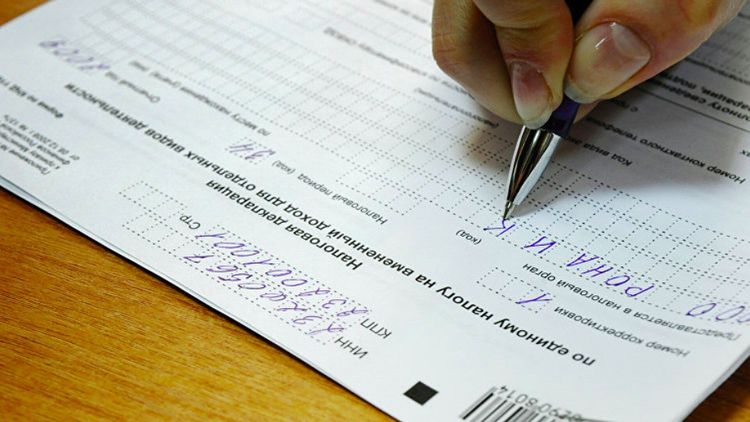
Yes. For the tax authority crypto is property, so income from a sale is subject to personal income tax and an individual files the declaration themselves. Acquisition costs can be deducted if you kept the confirmations.
How safe is it to hold savings in this asset?
As safe as any instrument with a single issuer. The KPMG audit reduced questions about backing, but a freeze on an individual address remains possible, so large amounts are best spread out.
What happens to USDT in Russia if I do nothing before September?
Nothing immediate. The provisions switch on gradually, and liability for individuals only appears after July 2027. But it is worth checking your withdrawal routes in advance, while there is still a choice.
Crypto markets expert and head of content and marketing at EIDEX. Covers market structure, exchange infrastructure and cross-chain trading - turning on-chain data and market shifts into clear, actionable research for traders.