
What a Cash Crypto Exchange Really Costs You
There is a version of crypto that has nothing to do with apps. You message a manager, agree a rate, take an elevator to the thirtieth floor of a glass tower, count banknotes on a desk, and walk out with coins in your wallet and no bank record anywhere. In Moscow that version lives in the business district known as Moscow City, and in August it had a very bad month.
What happened in August
On 7 August, the Russian security service announced the detention of more than twenty people working at exchange points inside the complex. According to the official account, nine channels for moving money abroad had been shut down, and the desks had been selling crypto to people who were themselves being defrauded by phone scammers.
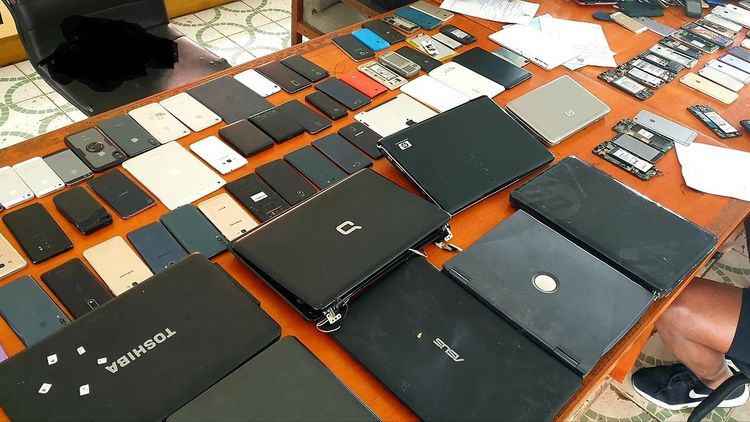
On 19 August a Telegram channel that covers law enforcement reported a second wave: officers entering roughly fifteen desks across different towers on the same morning, staff taken in for questioning overnight, most released by dawn, two held. That second account has no official confirmation, so treat the details as unverified.
The charge under discussion is the part worth noticing. It was not about cryptocurrency. It was about running banking operations without a licence.
Why cash desks live in skyscrapers
A cash crypto exchange exists because a bank transfer leaves a record and a compliance officer asks questions. Cash does neither. The client arrives with notes, receives coins, and no institution ever sees the transaction.
The address is chosen deliberately. An office in a landmark tower reads as legitimate in a way a basement does not: there is a security desk, a badge, a lobby, and law firms on the floor below. None of that has any legal meaning, and all of it works on the customer.
Density matters too. When dozens of desks operate inside one complex, clients come for competition: you can compare four rates without leaving the building, and a swap takes fifteen minutes rather than a banking day.
And the crowd provides cover. Thousands of people pass through those turnstiles daily, so one more visitor with a backpack is invisible.
How a cash crypto exchange deal runs
The mechanics are near-identical everywhere. You message a bot or a manager, lock a rate, arrive at the office, the cash is counted on a machine, and the operator sends coins to the address you provide.
Money and crypto change hands in one room. There is usually no contract, and your only record is a chat history. That simplicity is the entire product.
What separates one desk from another is not the sign on the door but where its liquidity comes from. Some hold inventory on their own accounts. Some hedge each trade on an exchange the moment it closes. Some are simply matching two clients in the same room. This determines both your rate and your odds of receiving coins with a dirty history.
What it costs
The rate at a cash crypto exchange is always worse than the exchange price, and that gap is the honest part of the pricing. The spread typically runs one to two percent of the amount.
Then come the additions: a network fee on the outgoing transfer, a premium for same-hour service, sometimes a separate charge for worn banknotes. Because the total is assembled from three parts, comparing desks by headline rate alone is meaningless.
One rule covers this: ask for the final number before you travel. A desk that only names it once you are standing in the office is pricing your reluctance to leave.
Risk one: frozen on arrival
The most common bad outcome at a cash crypto exchange involves no police at all. The client receives coins, sends them to an exchange account, and the deposit is frozen because the address appears in a chain connected to theft or darknet activity.
What follows is a compliance review. The platform asks for proof of the source of funds, and there is no receipt for a stack of banknotes handed over a desk. Reviews run for weeks, and some balances are never released.
Two habits reduce this. Ask for the sending address in advance and check it. Then move what you received in tranches rather than in one transfer, so a single flag does not lock the whole amount.
Risk two: the criminal angle
Most clients assume only the operator is exposed. In practice, regular large cash deals draw attention to the person carrying the cash as well.
The sharper danger is the courier role. Young people are recruited to collect money from fraud victims and deliver it to exchange points, told they are assisting law enforcement as freelancers. In the August footage, several detainees said on camera that they believed they were working for the security service or the financial monitoring agency.
That belief does not survive contact with a prosecutor. Participation in the collection chain is charged as part of the fraud scheme, and sentences are measured in years.
Risk three: the rate that moves at the counter
The mundane risks get less attention than the dramatic ones and cost more people money.
The quoted rate changes on arrival, blamed on volatility. A commission appears at the last moment, once you are already in the room with a bag. The count comes up short and gets recounted in the desk's favour.
And the transfer that leaves "right away" sometimes sits unconfirmed until you are out of the building. At a serious desk the transaction is broadcast in front of you and you wait for confirmations before you leave.
Risk four: physical safety
This one is invisible until it is not. You travel to a well-known address carrying a large amount of cash, and at minimum the operator knows the time, the sum and your face.
Robberies following such visits reach the courts regularly. Client lists leak too: an address, an amount and a timestamp are worth very little on the resale market, which is exactly why they get sold.
A safely organised visit is a boring one. No cash visible in the lobby, no route posted in a group chat, no acquaintances tagging along for the first time.
The charge that actually matters
"Unlicensed banking" sounds like a technicality. It is the opposite of one.
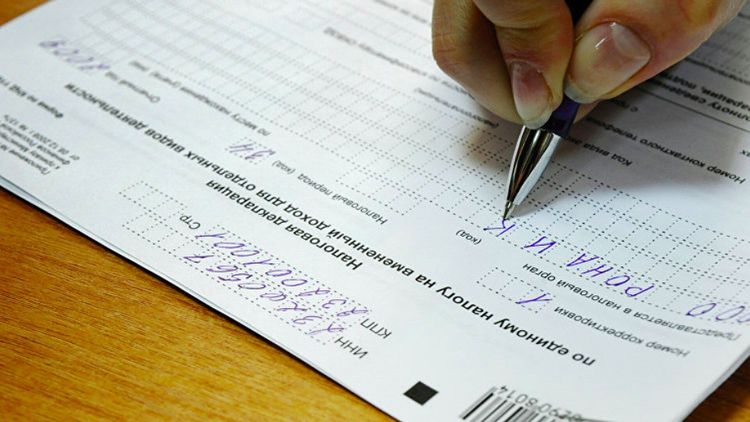
If a company takes cash, performs settlements and pays out funds, it is running banking operations, and those require a licence. Without one, the business itself is the offence - in Russia under article 172 of the criminal code, with penalties reaching seven years where the income is large.
Crypto is incidental to that charge. This is why enforcement targets operators rather than customers: proving the business model is far easier than unpicking every individual trade.
How to vet a desk before you go
Vetting a cash crypto exchange starts with the legal entity. A real operation has a registered company, public ownership and terms you can read, not just a handle in a messenger.
Check the age of the domain and the date of the earliest reviews. Established desks accumulate a messy, contradictory history over years; fresh ones have twenty five-star reviews written in the same week in the same voice.
Look at rate monitors and dispute histories. Absence from monitoring sites is not disqualifying by itself, but it means every other check has to be stricter.
Notice whether the desk asks anything about you. Counterintuitively, zero verification is a warning: it means the operator does not care whose money crosses the counter, which is exactly the business model that gets raided.
Three questions for the operator
Which address will the coins come from, and can I have it now? A refusal ends the conversation.
What happens if the coins carry a risk flag? The correct answer is that the desk replaces them or refunds you, because asset cleanliness is their responsibility, not yours.
How is the deal documented? Even a simple electronic receipt plus a rate confirmed in writing separates a business from a cash box beside a lift.
What a careful deal looks like
Lock the rate in writing. Bring only the amount involved. Start with a small test portion and wait for network confirmations before the main part moves.
If the sum is significant, split it across two or three visits on different days. It costs time and it caps the damage under every scenario, which is the trade any professional would take.
Keep everything afterward: the chat, the screenshots, the transaction hashes. That archive is the only thing you will have if a bank or an exchange later asks where the funds came from.
When you do not need cash at all
Half of these visits are habit rather than necessity. If the money is already in a bank account, walking it into a tower adds risk without adding anything.
Buying on a regulated exchange leaves a paper trail that works in your favour later: the source of funds is a statement, not a story. For anything recurring, that alone decides it.
A cash crypto exchange makes sense in two situations - the money genuinely exists as paper, or you need settlement faster than any bank will provide. Outside those, the counter loses on price and on peace of mind.
Where this is heading
Russian regulation keeps tightening: a miner registry, limits for non-qualified investors, new rules for digital asset transactions. The cash trade is being pushed out of the grey zone toward something licensed.
The practical effect is consolidation. Small desks close after each raid, and volume migrates to operators willing to keep records. The trade will not disappear, because the demand behind it has not changed - it will simply become duller and more expensive.
The visible side effect is already here: some desks have moved into closed chats and now work by referral only. For the client that is the worst configuration available, because a desk you cannot look up is a desk you cannot check.
The general lesson
None of this is specific to one city. Every large financial hub has an over-the- counter cash market for crypto, in Dubai, Istanbul, Hong Kong and Lagos, and the structure repeats with local details swapped in.
Wherever it operates, the same three things hold. The customer carries the counterparty risk personally, the receipt does not exist, and the licence question is decided by regulators rather than by how impressive the lobby looks.
Is using a cash crypto exchange illegal?
For the customer the trade itself generally is not. The legal exposure sits with a company performing settlement without a licence, and with the origin of the cash if the amounts are large and regular.
What do I do if the coins I received are flagged?
Contact the desk immediately and ask for a replacement. If they refuse, do not deposit the coins to an exchange - check the address first, because a flagged deposit turns into a review that lasts weeks.
Are there fewer desks after the raids?
Some closed and some moved into private chats. Demand did not move at all, which is why storefronts are being replaced by word-of-mouth referrals, a far less verifiable arrangement.
Can a customer end up in a criminal case?
As a witness, easily, if a deal appears in seized records. As a defendant, if the person acted as a courier or routinely moved money belonging to others.
How do I buy crypto without cash in a restricted market?
Through a regulated platform with bank withdrawal, or peer-to-peer trading with an escrow and a dispute process. Slower, but there is a record and there is a referee.
What if a desk disappears with my money?
File a police report and keep copies of the chat and the transaction hashes. Individual odds are poor, but these cases are opened when dozens of victims file at once, and nothing is opened when nobody does.
Crypto markets expert and head of content and marketing at EIDEX. Covers market structure, exchange infrastructure and cross-chain trading - turning on-chain data and market shifts into clear, actionable research for traders.