Energy as an Asset: How People Earn on Renting Out Wallet Resources on Tron
On the Tron network, transaction fees can be paid not with money but with "energy" - an internal resource of the network. And this energy has a market: some users rent it to save on fees, while others lease it out and earn income. Let us break down how this process works, who benefits from it, and what its pitfalls are. This is not a step-by-step guide, but an overview of the mechanics themselves and their economics.
What Energy Is on the Tron Network
Unlike most blockchains, Tron allows transactions to be carried out with almost no direct costs. Instead of paying a fee in coins, a user spends energy and bandwidth - two resources the network allocates to TRX holders.
Energy is needed primarily for smart-contract operations, including stablecoin transfers. If there isn't enough of it, the network simply burns part of your TRX as payment. So energy is effectively a way to avoid overpaying for activity on the network. The more often a user makes transactions, the more noticeable the savings: for an active trader, the difference between renting and burning coins over a month can amount to tens of dollars.
Where Energy Comes From
There are two ways to obtain energy. The first is to freeze (stake) your own TRX: the more coins you lock up, the more energy is credited to you each day.
The second way is to rent energy from someone who isn't using it. It is precisely at the intersection of these two scenarios that an entire market arose, where the TRX cryptocurrency works as a tool generating passive income for its holder.
Buying Energy: Rent Energy
Renting energy solves a specific problem. For an active user who frequently sends USDT, it is more cost-effective to rent a package of energy once than to burn coins on fees every time.
The cost of renting is usually several times lower than the amount of TRX burned for the same operations. That is why traders, arbitrageurs, and services with a high volume of transfers almost always buy energy in advance - it is cheaper and more predictable. This is especially noticeable for those who move stablecoins in hundreds of transactions a day: without rented energy, their spending on fees would rise several times over.
Selling Energy: Delegate
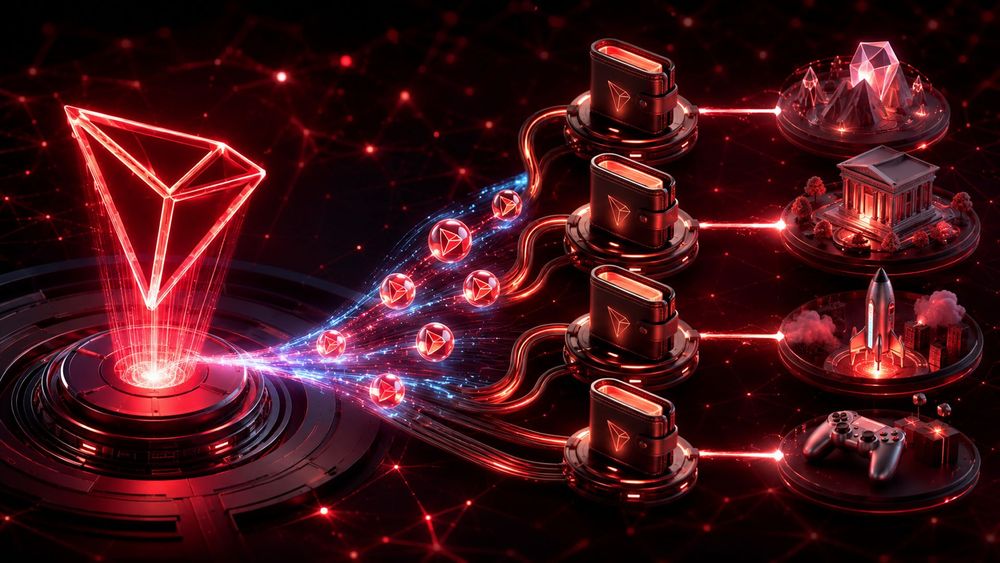
The other side of the market is delegation. The owner of frozen TRX transfers accumulated energy to another address for a set period and receives a reward for it.
In essence, this is renting out a "power generator": while another user makes use of your resource, your coins stay with you, and you get paid. When the term ends, the energy returns to your control and once again becomes available to lease. Importantly, the TRX itself never leaves your address - the buyer receives only the right to use the resource, not the coins themselves. This is the fundamental difference between delegation and handing over funds: you don't entrust your coins to a stranger and don't risk the capital itself, you merely temporarily cede a network resource that will replenish anyway.
How It Works by Analogy
The easiest way to picture it is a power plant with several generating units. Each unit has a battery of limited capacity, charged to the top.
When you delegate energy, you effectively hand the buyer control over some of the units and their batteries. They use up the accumulated "charge," and then, for the duration of the rental, receive whatever the units generate anew. When the term ends, the units return to you, the batteries recharge - and the resource is ready to sell again.
How Much You Can Earn
The yield depends heavily on the conditions. By practitioners' estimates, the net annual return through specialized services stays in the range of 20-28% a year, and sometimes higher - noticeably more than a bank deposit.
At the same time, services charge a commission, sometimes up to 45%, which eats up a significant part of the profit. In theory, solo selling without intermediaries can yield around 50% a year, but that requires your own high-speed bot and constant attention to the market - an option more suited to professionals.
What Affects the Profit
Earnings are not fixed and fluctuate from day to day. They are influenced by demand for energy, the number of active renters, the size of your share in the pool, and the settings of the specific service.
Large stakers often receive a smaller percentage than small ones: income is distributed unevenly. On top of that, platforms regularly introduce restrictions - for example, for splitting sums across many addresses, which also lowers the final rate. Seasonality is worth factoring in too: during periods of high market activity, demand for energy rises, and with it rental rates, whereas in a lull income can sag noticeably. That is why it is more accurate to assess real yield over a longer stretch of time rather than a single good day.
The Upsides of This Income
The main upside is that it's passive. The coins stay in your wallet; you don't sell them or hand them over to someone for safekeeping - you merely lease out a network resource.
The second upside is a relatively high yield in cryptocurrency compared with traditional instruments. The third is flexibility: the rental term and terms can be changed, and frozen TRX returns to the owner's full control at any point after unfreezing.
Downsides and Risks
But this income can hardly be called perfect. First, TRX has to be frozen, which means you can't dispose of the coins instantly - unfreezing takes time.
Second, income depends on market demand: if there are few renters, the energy sits idle and profit drops. Third, intermediaries take a tangible commission and change the rules, and dealing with unfamiliar services always carries the risk of an error or loss of funds.
Who It Suits
Selling energy is of interest primarily to those who already hold TRX for the long term and don't plan to sell it. For such owners, it is a way to make an idle asset generate income without parting with it and without giving up potential price appreciation.
For those who want to freely dispose of their funds, or who aren't ready to get into the nuances of staking and delegation, this scheme is a worse fit. Like any dealing with cryptocurrency, it requires an understanding of the mechanics and a sober assessment of the risks, not just a bet on a high percentage. A newcomer would be wiser to start with a small amount and a proven service, and only then decide whether to scale up.
The Bottom Line
The energy market on Tron is a vivid example of how a technical feature of a network turns into a financial instrument in its own right. For some it is a way to save on fees, for others a source of passive income from their frozen coins.
The key is to understand that the yield here is not guaranteed and depends on demand, commissions, and platform terms. Selling energy should be approached the same way as any investment: calculate the real profit after all costs, and don't put in more than you're prepared to freeze for a long time.
What is energy on the Tron network?
Energy is an internal network resource that Tron allocates to TRX holders, used instead of paying a fee in coins. It is needed primarily for smart-contract operations, including stablecoin transfers. If a wallet does not have enough energy, the network simply burns part of its TRX as payment - so energy is effectively a way to avoid overpaying for activity on the network.
Where does energy come from and how do you get it?
There are two ways. The first is to freeze (stake) your own TRX: the more coins you lock up, the more energy is credited to you each day. The second is to rent energy from someone who isn't using it. It is at the intersection of these two scenarios that an entire market arose, where TRX works as a tool generating passive income for its holder.
What is energy delegation?
Delegation is the selling side of the market: the owner of frozen TRX transfers accumulated energy to another address for a set period and receives a reward for it. The TRX itself never leaves your address - the buyer receives only the right to use the resource, not the coins. When the term ends, the energy returns to your control and becomes available to lease again.
How much can you earn on renting out energy?
By practitioners' estimates, the net annual return through specialized services stays in the range of 20-28% a year, and sometimes higher. Services charge a commission, sometimes up to 45%, which eats up a significant part of the profit. Solo selling without intermediaries can in theory yield around 50% a year, but that requires your own high-speed bot and constant attention to the market.
What are the risks and who does this suit?
TRX has to be frozen, so you can't dispose of the coins instantly - unfreezing takes time. Income depends on market demand, intermediaries take a tangible commission and change the rules, and dealing with unfamiliar services carries the risk of error or loss of funds. It suits those who already hold TRX long term; a newcomer would be wiser to start with a small amount and a proven service.
Crypto markets expert and head of content and marketing at EIDEX. Covers market structure, exchange infrastructure and cross-chain trading - turning on-chain data and market shifts into clear, actionable research for traders.