The Digital Ruble Goes Live: What Russia's CBDC Actually Does
From September 1, 2026, twelve systemically important banks are required to give customers access to a third form of money. The largest of them publicly doubts anyone needs it, and iPhone owners were left without a wallet altogether.
Here is what the digital ruble is, how it differs from money on a card, how to open a wallet, what transactions cost, and why banks met the launch without enthusiasm.
What the digital ruble is
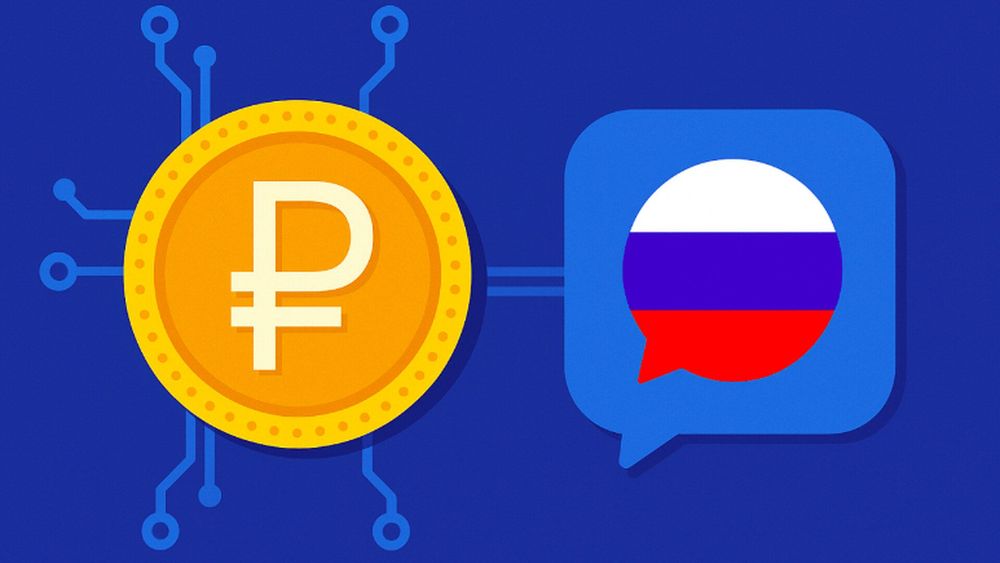
It is a third form of money alongside cash and bank deposits. One digital ruble always equals one paper ruble - there is no exchange rate between them and there cannot be.
The difference is where the money sits. Cash is in your pocket, deposits are on a commercial bank's balance sheet, and the digital ruble is recorded on a platform run by the Bank of Russia. Your bank is a shop window: you open the wallet through its app, but the funds live with the central bank.
That leads to one practical consequence. The digital ruble is a direct claim on the central bank, without a commercial intermediary - which is why the money survives a bank losing its license.
Cash, deposits and the digital ruble compared
| Feature | Cash | Bank deposit | Digital ruble |
|---|---|---|---|
| Where recorded | with the holder | at the bank | on the central bank platform |
| Who is liable | the issuer | the bank | the central bank |
| Interest on balance | none | possible | none |
| Cashback | none | possible | none |
| Works offline | yes | no | offline mode declared |
| Privacy | high | low | low |
Remember the essential point: it pays nothing. No interest, no cashback. It is a payment instrument, not a savings one.
How the platform works
The central bank built and runs the infrastructure. It keeps the ledger of wallets and transactions, while banks connect to it and supply the customer interface.
Each person has exactly one wallet, no matter which app opened it. That breaks the usual pattern: you may hold accounts at any number of banks, but only one digital wallet exists per person.
Technically this is not a cryptocurrency. There is no mining, no public blockchain and no anonymous addresses - the platform is closed, every transaction is visible to the central bank, and the owner's identity is known in advance.
What changed on September 1, 2026
The instrument moved from pilot to broad circulation.
- Twelve systemically important banks must provide access, including Sberbank, VTB, Alfa-Bank, Gazprombank and Promsvyazbank.
- The wallet has to live inside a section of the bank's own app rather than as a separate program from a third-party developer or the central bank itself.
- Large companies are required to accept it. Telecom operators and marketplaces have announced support.
The infrastructure exists on paper. In practice, adoption depends on two things: whether people want it, and whether it works on their device.
How to open a wallet
The steps are nearly identical everywhere.
- Update your banking app to the current version.
- Find the wallet section, usually placed in the accounts menu.
- Confirm the wallet opening and accept the terms.
- Fund it from an ordinary account - 5,000 rubles is enough to test.
- Check the balance and try a payment at a merchant that accepts it.
Funding and transfers back to a bank account are free for individuals. The top-up limit is 300,000 rubles per month, set at platform level rather than by an individual bank.
How payments work
Paying differs from tapping a card, and that takes some adjustment.
In a shop. The merchant shows a QR code, you scan it in the app and confirm. The money moves directly from your platform balance, bypassing card acquiring.
Between people. Transfers go by phone number, much like a fast payment system. No fee for individuals within the limit.
Offline. A no-internet mode is declared, working through device contact. In practice the scenario is still rare and untested at scale.
One catch: you can only pay where the merchant has enabled acceptance. The universality of a card will arrive no earlier than small business finishes connecting.
What it costs
The central bank set the tariffs, and for individuals they look generous.
| Operation | Individual | Business |
|---|---|---|
| Wallet top-up | free | free |
| Transfer to a person | free within the limit | - |
| Paying for a purchase | free | below card acquiring |
| Withdrawal to a bank account | free | per tariff |
For merchants the saving is real. Card acquiring costs a percentage of turnover, so on a 2,000,000 ruble monthly turnover even one percentage point of difference is 20,000 rubles a month, or 240,000 a year. That arithmetic explains why large retail connects without being pushed.
Three everyday scenarios
Theory gets clearer with numbers.
A 300-ruble coffee. You scan, confirm, the merchant sees the credit instantly. For the buyer the difference from a card is invisible except for one thing: no cashback. If your card returns 5%, you gave up 15 rubles of value.
Rent at 45,000 rubles. Here the new instrument does well: person-to-person transfers are free and settle immediately. Then again, fast payment systems are free within their own limits, so the advantage is not absolute.
A shop turning over 2,000,000 rubles a month. This is where real money appears, for the merchant rather than the customer.
The pattern: the larger the sum and the higher the payment volume, the more interesting this is for the seller - and the more indifferent the buyer stays.
Why there is no digital ruble on iPhone
This is the most visible hole in the launch. Russian banks could not ship updated iOS builds carrying the feature through the App Store.
Two reasons. Sanctions come first: Apple blocks apps from sanctioned institutions. Second are the technical requirements - apps must use Russian cryptographic standards and call specific domains and platform APIs. To Apple those elements read as markers of state financial infrastructure, which is grounds for rejection.
As Dmitry Entin, head of development at the IT company EvApps, explains, Apple analyzes not only code but build provenance: which Apple ID and keys were used, which machine compiled it, what network calls the app makes. When a sanctioned bank is detected the app gets blocked, and sometimes the entire developer account with it. Workaround clones survive in the store for days, occasionally hours.
What iPhone owners are left with:
- a web interface, if the bank built one;
- moving payments to an Android device;
- waiting for a political solution.
VTB, RSHB and Bank Rossiya have said outright that their wallets work only in Android apps.
What Sber says about demand
The assessment from the country's largest bank is sobering. Taras Skvortsov, Deputy Chairman and CFO of Sber, said he sees no clear mass interest: enthusiasm comes mainly from the central bank, while corporate and retail clients show no push of their own.
"I would rather not give precise estimates, but in my view the share of this instrument will amount to tenths of a percent of turnover at best and will have no meaningful impact," he told TASS.
His second objection matters more than the first. Money converted into digital rubles is effectively withdrawn from circulation and sits isolated in central bank accounts, where commercial banks cannot deploy it. In his words, those funds "leave the economy."
Why banks are cool on it
The mechanics are obvious once you look at how a bank earns. Deposits fund loans, and the spread is the business. Every ruble that moves to the central bank platform drops out of that machine.
Three consequences:
- Banks have no incentive to promote it. No cashback, minimal fees, a shrinking funding base.
- The cost of money may rise. The more that leaves the banking system, the pricier lending becomes to fund.
- Promotion falls to the state. Which explains why acceptance is mandatory for large companies.
For citizens the practical takeaway: do not expect bonuses for using it. The bank has no economic reason to offer any.
Digital ruble versus cryptocurrency
The confusion is constant, though the only thing shared is the word "digital."
| Feature | Digital ruble | Crypto assets |
|---|---|---|
| Issuer | central bank | no single issuer |
| Price | pegged to the ruble | set by the market |
| Privacy | none | pseudonymous addresses |
| Can be blocked | yes | depends on network and asset |
| Volatility | zero | high |
In short, this is state money in a new wrapper, not an alternative to it. Compare it with a card and cash, not with assets whose price moves daily.
What it means for business
For companies this is mandatory rather than optional. Large firms have been accepting it since September.
What a company needs to do:
- enable acceptance through the bank servicing its account;
- update point-of-sale software and payment details;
- train staff: payment runs through a QR code and looks nothing like a card tap;
- reflect the change in accounting policy.
The upside is real - lower fees than acquiring. The downside is equally clear: nobody reimburses the cost of upgrading the checkout software.
Risks and privacy
The question asked most often is transparency. All transaction records live on a single platform, which means the state sees money movement in more detail than in the banking system.
Second is programmability. The platform can technically restrict what a payment may be spent on - targeted benefits limited to certain categories, for example. So far such mechanisms are framed as budget control, but the capability exists.
Third is technical dependence. One wallet per person means a single point of failure: an outage takes down every payment at once, regardless of which app you use.
The real risk here is not losing money. It is losing flexibility - less privacy, fewer choices, full dependence on one system.
Myths already in circulation
Four persistent misconceptions.
"Cash will be abolished." No. The new form is an addition, not a replacement, and nobody is required to give up cash.
"Salaries will be paid in it by force." An employer cannot use this form without the employee's consent.
"The money expires." There is no expiry date. It is the same national currency in a different ledger.
"It is the same as cryptocurrency." It has an issuer, a fixed value and full transparency - the opposite of crypto assets on all three counts.
Lessons from other countries
Trading in crypto assets follows a separate track - see how crypto exchanges operate in Russia. Russia is not first: central bank digital currencies have launched in China, India and Nigeria, and dozens of countries keep projects in pilot stage.
The common lesson is unflattering. Launching such a system is technically straightforward; generating demand is not. People keep paying the way they are used to unless the new form offers a visible advantage. Where governments added bonuses or restricted alternatives, adoption grew faster. Where they relied on convenience alone, it crawled.
That makes Sber's tenths-of-a-percent forecast look less like pessimism and more like a sober read.
Is it mandatory
No. Opening a wallet is voluntary, and you may keep using cash and cards. The obligation applies to infrastructure: banks must provide access, large companies must accept payment.
What comes next
The next year will show whether the forecast holds. Three forks matter: whether iOS gets resolved, whether people find a practical reason to hold money in the new form, and how the banking system reacts to losing part of its funding base.
For now the picture is simple. The infrastructure is live, obligations are assigned, and demand still has to be created.
Does the balance earn interest?
No. Neither interest nor cashback is provided - that is a deliberate policy choice.
Can I move digital rubles back to a card?
Yes, transfers back to a bank account are available and free for individuals.
What if my bank loses its license?
The funds are unaffected: they are recorded on the central bank platform, not on the bank's balance sheet. Access resumes through another institution's app.
Are there limits?
Top-ups are capped at 300,000 rubles per month. The limit is universal across banks.
Can it be used abroad?
No. The instrument works domestically, with merchants that enabled acceptance. Cross-border settlement is a separate project.
How is this different from a fast payment system?
A fast payment system moves deposit balances between banks. Here the money is held outside the banks, on the central bank platform, and moves within it.
Crypto markets expert and head of content and marketing at EIDEX. Covers market structure, exchange infrastructure and cross-chain trading - turning on-chain data and market shifts into clear, actionable research for traders.