Durov on Rosfinmonitoring's List: What It Means for Gram, In-App Purchases and Telegram Access
In the space of three days, the legal status of Telegram's founder in Russia changed sharply. Here is what it actually means for an ordinary user: whether you can still buy Stars, pay for Premium and hold Toncoin - and what to do about access to the service.
Timeline: What Happened
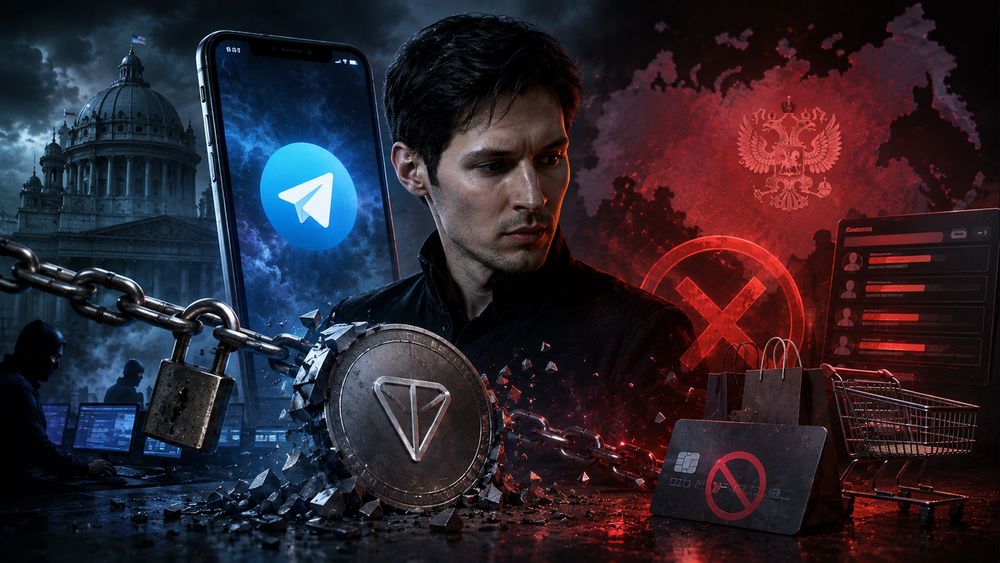
On 29 July, Russia's Federal Security Service announced that Pavel Durov had been charged under Part 1.1 of Article 205.1 of the Criminal Code - facilitating terrorist activity. The provision carries a sentence of up to 15 years. He was placed on an international wanted list.
The stated basis, according to the FSB, is that Telegram's administration does not remove channels, chats and bots which the agency says are used to coordinate attacks and sabotage.
On 30 July, Rosfinmonitoring - Russia's financial monitoring service - added Durov to its register of individuals deemed involved in extremist activity or terrorism. Under Russian law, banks freeze the assets of anyone on that register and suspend servicing their accounts.
Durov responded publicly on his own channel, dismissing the designation. Neither he nor Telegram has accepted the FSB's characterisation of the company's moderation practices.
The Lawyers' Position: The Listing Targets a Person, Not a Company
Denis Polyakov, who heads the Digital Economy practice at the law firm GMT Legal, told Bits.media that buying Stars, paying for a Premium subscription, using the built-in crypto wallet and trading Gram (Toncoin) all remain possible for now.
The reasoning is straightforward: the register lists Durov himself, not the legal entity operating the service. Statutory restrictions attach to the assets and banking relationships of the specific listed individual - not to everyone who uses a product he founded.
What the Regulator Itself Clarified
Rosfinmonitoring confirmed that reading directly: the restrictions imposed on Durov do not extend to Telegram as a legal entity. For users, that is the single most consequential statement anyone has made on the matter.
The Opposing View
Andrey Svintsov, deputy chair of the State Duma committee on information policy, recommended that Russians stop buying TON (Gram), stop paying for subscriptions and cease any operations inside the ecosystem.
The status of that statement matters. It is a legislator's recommendation, not a normative act and not a regulatory clarification. It carries no legal force - but it does indicate the direction in which regulation may move.
The Scenario That Would Change Everything
Polyakov allowed for the possibility that the operating company could itself be added to the register in future, as happened with Meta in 2022.
That would change the picture fundamentally: payments to such an entity would fall under restrictions, and banks and payment processors would begin blocking transactions. For now, however, this is a hypothesis rather than a fact.
The 2022 precedent is worth examining, since it is what the lawyers are pointing to. A Russian court declared Meta an extremist organisation but explicitly noted that the ban did not extend to ordinary users of its services. Liability attached to organisational activity and public display of the company's symbols, not to the mere act of using the product. Practice bore that reading out: no cases were brought against ordinary people for using the company's services. It is not a guarantee, but it is a useful reference point - even an expanded listing would not automatically create liability for someone who simply pays for a subscription.
Purchases and Subscriptions in Practice
Payments for Stars and Premium run through payment gateways and app stores. As long as the operating company is not on the register, these transactions are no different from any other foreign in-app payment.
The practical risk here is a mundane one: payments may fail because of an individual acquiring bank's own policy. That is a compliance decision by a particular credit institution, not a prohibition.
Gram and Toncoin: What About Trading
The token trades on dozens of venues outside Russian jurisdiction, and its circulation is not tied to the legal status of any one individual. Holding the asset or transacting in it does not, in itself, constitute an offence.
A degree of caution is still sensible. Holding a large position in an asset whose price is bound up with regulatory news around a single ecosystem is elevated risk on its own terms, quite apart from any legal question.
When Telegram Doesn't Work
Availability is a separate layer of the problem, and it predates all of this. Roskomnadzor, the communications regulator, has been restricting Telegram in Russia since August 2025 and confirmed in February 2026 that the measures would continue. Slowdowns and connection failures stem from that, not from the founder's new status.
Distinguishing the two is easy enough. If the problem is on the network side, symptoms are identical across everyone on the same carrier: media loads slowly while text messages still go through. If it is the device, someone on the same Wi-Fi will have no trouble at all.
Web and Desktop as a Fallback
When the main client stalls, switching the access channel often helps. The web client frequently runs more reliably than the app, because its traffic travels over ordinary HTTPS in a browser and is less exposed to protocol-level filtering.
The full web version lives at web.telegram.org; you sign in by authorising through an already-active session on your phone. Doing it without the phone at the initial login stage will not work - session confirmation is still required.
One caveat: secret chats are unavailable outside mobile. Neither the web version nor the desktop builds support them; that feature remains mobile-only.
Troubleshooting Checklist
If access drops, work through these in order:
- Restart the device - this clears a share of problems caused by hung network sessions.
- Clear the cache, either in the app or the browser.
- Switch your connection source: mobile data instead of Wi-Fi, or the reverse.
- Disable browser extensions - ad blockers and VPN plugins frequently break the web client.
- Check which server the client is connecting to in its connection settings.
- Try signing in through a different client or a different device.
- If nothing works, reinstall from a clean build and sign in again.
How the Proxy Settings Work
The client includes a built-in proxy section - a standard feature documented by the messenger's developer and requiring no third-party software. A proxy server acts as an intermediate link: the client sends data not directly to the service's servers but through an additional node, which passes it on.
These settings did not originate from access restrictions. They were built for corporate networks, where direct internet access is closed off by company policy, which is why the section has been present in every build of the client since early versions and is described in the general documentation alongside the other connection parameters.
What to Do in Advance
While the service is working, a few precautions are worth taking:
- export your message archive through the desktop client, which also lets you download all photos and attachments;
- save an export of any important conversation as a separate file;
- duplicate critical contacts through another communication channel;
- confirm that you know how to sign out and back in without losing data.
Bottom Line
As of today there are no direct prohibitions on users. The regulator has confirmed that the restrictions apply to an individual, not to the service. A legislator's recommendation carries no legal force.
The real inconvenience stems not from the register but from Roskomnadzor's restrictions, which have been in place for nearly a year and have nothing to do with the new case. The situation is fluid, and there is one specific signal worth watching: whether the operating company itself appears on the register. That step - not statements by individual deputies - is what would change the legal position of an ordinary user.
This article is informational and does not constitute legal advice. The designations described are those of Russian state bodies and reflect their position; the charges have not been tested in court.
Can you still buy Stars and pay for Premium?
Yes. Payments run through payment gateways and app stores, and as long as the operating company is not on the register these transactions are no different from any other foreign in-app payment. Failures are possible because of an individual acquiring bank's own policy - that is a compliance decision by a particular credit institution, not a prohibition.
Is it legal to hold and trade Gram (Toncoin)?
The token trades on dozens of venues outside Russian jurisdiction and its circulation is not tied to the legal status of any one individual. Holding the asset or transacting in it does not, in itself, constitute an offence.
Do the restrictions extend to Telegram as a company?
No. Rosfinmonitoring confirmed directly that the restrictions imposed on Durov do not extend to the service as a legal entity. A State Duma deputy's recommendation to stop operations inside the ecosystem carries no legal force.
Why is Telegram running slowly?
Roskomnadzor has been restricting the messenger in Russia since August 2025 and confirmed in February 2026 that the measures would continue. Slowdowns stem from that, not from the founder's new status. The tell for a network-side restriction is identical symptoms across everyone on the same carrier.
What would change if the operating company itself were listed?
Payments to that entity would fall under restrictions and banks and payment processors would begin blocking transactions. The 2022 Meta precedent suggests that even then liability would not attach to the mere act of using the product: no cases were brought against ordinary users.
Crypto markets expert and head of content and marketing at EIDEX. Covers market structure, exchange infrastructure and cross-chain trading - turning on-chain data and market shifts into clear, actionable research for traders.