How to Open a Crypto Account in Russia: The New Tax ID Rule
Opening an account at a Russian digital depository will require the client to supply a taxpayer identification number, known as the INN. That is according to Vlada Gracheva, adviser to the head of Rosfinmonitoring, the financial intelligence unit, who explained the requirement as part of the fight against money laundering.
It sounds like paperwork, but this is the first time the INN becomes a mandatory identifier anywhere in the Russian financial system. Below is what changes, how to open a crypto account in Russia under the new rules, how such an account differs from an ordinary wallet, and which transactions the state now sees.
What exactly changes in the rules
The key quote from the official: "For the anti-money-laundering system, the client's INN becomes a new mandatory, specifically mandatory, identifier. Nobody had this before. This is to ensure the transparency of transactions carried out with cryptocurrency."
A comparison with familiar products shows how new this is:
- a bank deposit does not require an INN;
- neither does a brokerage agreement;
- taking out a loan does not require one;
- for a crypto account at a digital depository it is mandatory.
In other words, the state applies a stricter standard to digital asset operations than to ordinary money. In banking practice the INN can be requested, but there the requirement is optional.
Why the tax ID specifically
This number has a property that a passport does not. The INN is a 12-digit code assigned to a person once, valid across the whole country, and it never changes, even when the surname, the address or the passport details do.
For the anti-money-laundering system that means end-to-end identification: one person's transactions are linked together regardless of how many times their documents changed. A passport cannot do that job, because a replacement comes with a new series and number.
In parallel, the Bank of Russia is working on tying the INN to bank details. That groundwork is needed for the Antidrop platform, whose launch is scheduled for 2027. The crypto requirement simply arrived first in the queue.
What a digital depository is
It is a licensed organisation that keeps records of clients' assets. The role is roughly the same as a securities depository: it does not trade on your behalf, it records who owns what.
The fundamental difference from a crypto wallet is who holds the keys. At a depository the record of ownership sits in an accounting system and the organisation controls the keys. It is worth being clear about this: legally you hold a claim, not the asset itself in the technical sense.
Opening an account inside such a structure is not the same thing as creating a wallet yourself. The first route gives you legal protection and reporting, the second gives you full control and equally full responsibility.
How to open a crypto account in Russia: the steps
The procedure repeats the registration of a brokerage agreement, with one addition.
- Choose a licensed platform. Only organisations on the register maintained by the regulator have the right to operate in Russia.
- Prepare the documents. Passport, INN and possibly proof of address. The exact set depends on the platform.
- Pass identification. In person, or remotely through biometrics.
- Sign the agreement. Read the section on what happens when transactions are blocked.
- Fund the account. In rubles by bank transfer, or by moving assets in from outside.
- Check your status. Until identification is confirmed, transactions are unavailable.
Ask separately what happens on withdrawal to an external address. Rules differ between platforms, and some allow withdrawals only to a wallet that has already been verified.
The 60,000 ruble threshold
The second part of the new rules concerns reporting. Rosfinmonitoring has been given the right to monitor all cryptocurrency transactions, and depositories are obliged to pass on data whenever a transaction exceeds 60,000 rubles, about $700 at current rates.
What goes to the regulator is the full detail on both payer and recipient: full name or company name, date of birth, INN, the blockchain address and the physical address.
The threshold was originally proposed at 100,000 rubles and lowered to 60,000 in the final version. The requirement also extends to foreign financial organisations if they deal with Russian residents.
The sum is small, and that is the part worth noticing. Reporting captures not only large deals but routine transactions of a few hundred dollars.
How an account differs from a wallet
The difference runs deeper than it looks, and the choice depends on what you need more.
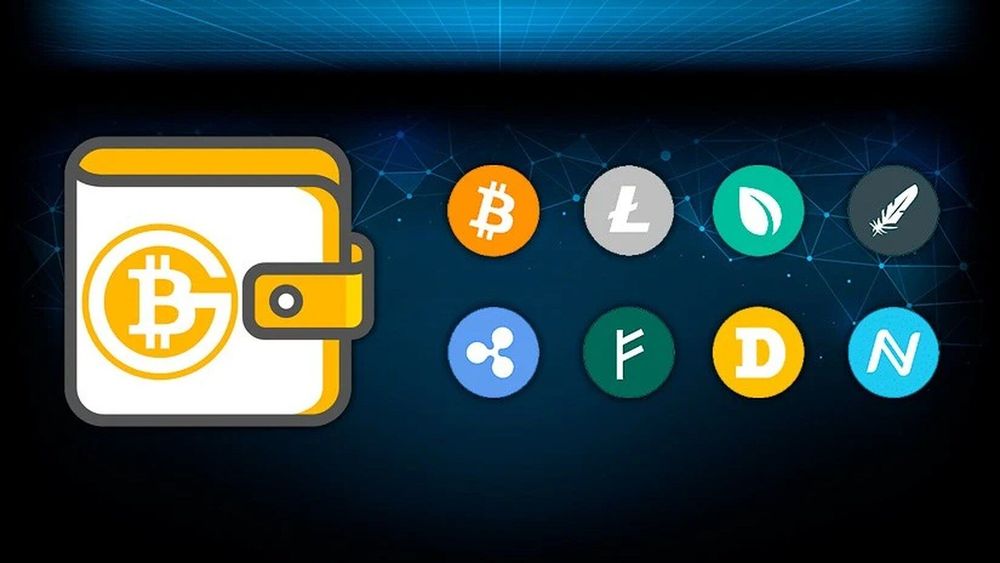
A crypto wallet is software or a device where the keys belong to you. No registration, no intermediary, complete freedom to dispose of your assets. The flip side: losing access is irreversible, and there is nobody to argue with when something goes wrong.
An account at a licensed organisation is a record in an accounting system. Identification is mandatory and transactions are reported, but you get a contract, support and a legal framework.
Many people use both: an account for purchases and transactions inside the legal perimeter, a wallet for storage. Wallets come in hot and hardware varieties, and the logic of splitting funds between them is the same as between cash and a deposit.
What you can hold in a licensed account
The toolkit inside the licensed perimeter is limited. Three cryptocurrencies are admitted to public circulation: bitcoin, ether and USDT. They were selected on capitalisation, turnover and at least five years of price history.
There are volume limits too. An unqualified investor may buy no more than 300,000 rubles a year, roughly $3,600, through any single intermediary. Qualified investors face no ceiling.
Individuals and companies go through different procedures. A business needs a fuller document pack, including proof of the source of funds.
How to set up a wallet yourself
The alternative to the licensed perimeter is holding your crypto yourself. There are three options, and they differ in the level of protection.
A mobile wallet. Installed in a minute and suitable for small amounts. The keys sit on the phone, and security equals the security of the device.
A browser extension. Convenient for working with decentralised services, but exposed: malicious add-ons have learned to substitute addresses right in the interface.
A hardware device. The keys never leave the unit, and signing is confirmed by a physical button. A reasonable choice for amounts you would hate to lose.
You can create a wallet in Russia without any permission at all: the law regulates intermediaries, not a person's right to hold crypto themselves. But understand the trade clearly. Without the seed phrase there is no way to restore access, and there is nobody to ask for help.
What to do immediately after creating a wallet:
- Write the seed phrase on paper, not in the notes app on your phone.
- Test recovery with a small amount while there is little at stake.
- Keep a copy somewhere other than the device itself.
- Do not photograph the seed phrase, because the picture goes to the cloud automatically.
What it costs to maintain
Licensed platforms in Russia have published few tariffs so far, but the cost structure is already clear.
Trading fee. A percentage of the transaction, usually 0.1% to 0.5% depending on volume.
Spread. The gap between the buying and the selling rate. Often larger than the fee itself, and almost never shown as a separate line.
Ruble deposits and withdrawals. A bank transfer is usually free, a card costs more.
Network fee. Charged when withdrawing crypto to an external address, and set by the network rather than by the platform.
Custody. Depositories may add a charge for holding assets on record, which is normal practice with securities.
Everything has to be counted together: a 0.1% fee on top of a 2% spread does not make a platform cheap.
If a transaction gets blocked
It happens, and inside the licensed perimeter the course of action is clearer than in the grey zone.
The first thing to do is ask for the reason in writing. The platform is obliged to answer, and the wording determines your next steps: an anti-money-laundering suspicion, a technical check, or a demand from the regulator.
The second is to prepare proof of where the crypto came from, meaning statements, contracts and screenshots of transactions. This is the stage where it becomes obvious why all of that was worth keeping.
The third is not to move funds in pieces to get around the limit. Splitting transactions is exactly what monitoring systems are built to recognise, and the outcome will be worse than the original problem.
What to decide in advance
Five questions worth answering for yourself before you start.
- Why you need an account. For a one-off purchase an exchange service will do. An account makes sense when transactions are regular.
- Whether you are comfortable with reporting. Everything passing through a licensed platform is visible to the regulator.
- Where the asset will live. Leaving it on the account or withdrawing to your own wallet are decisions with different risks.
- What sums you are planning. The annual cap for unqualified investors may turn out to be tight.
- What happens with tax. Buying does not create a liability, the obligation arises on a sale at a profit.
The full cost is worth working out in advance, because platforms build it from spread, fee and network charge. You can compare routes and fees on the exchange screener before confirming a trade.
What to remember about the risks
Five things that press releases do not mention.
Identification is irreversible. Data handed to a platform stays in the system and goes to the regulator on transactions above the threshold.
The asset list is not set by the platform. Extending it is the regulator's decision, and it will happen slowly because of the five-year history filter.
USDT carries issuer risk. The stablecoin is issued by an American company that can technically freeze funds at a specific address.
The rules will keep changing. The law came into force recently, secondary regulation is being written as it goes, and the terms you start on may look different in six months. That applies to limits, to the list of admitted assets and to identification requirements alike.
A block can happen through no fault of yours. Anti-money-laundering systems trigger on formal markers: amount, frequency, counterparty. Crypto received from an address with a bad history can raise questions even if you knew nothing about where the funds came from. Checking a counterparty before a deal is cheaper than proving good faith afterwards.
Who does not need a crypto account
Three cases where a licensed platform is a redundant link.
A one-off deal for a small sum. Paperwork and waiting for identification do not pay off if the task is to put in a few thousand rubles once.
Long-term storage without transactions. If you are not trading but holding for years, it makes more sense to move the asset to a hardware device and not pay for custody.
Working with assets outside the list. Three instruments are available inside the licensed perimeter. Everything else sits outside it, and an account will not help.
What happens next to the market
The INN requirement is part of a wider structure that Russia has been building around cryptocurrency since 2026. The logic is straightforward: first the perimeter of licensed participants is defined, then end-to-end identification is introduced inside it, and after that reporting on transactions is layered on top.
The next milestone is the Antidrop platform, due in 2027. If the INN is tied to bank details as well, the circle closes, and both the ruble leg and the crypto leg of a transaction will be linked to a single identifier.
What that means in practice. For anyone working inside the legal perimeter, be ready for the history of your digital asset operations to become as traceable as a card statement. For anyone holding crypto themselves, nothing changes, because the regulation targets intermediaries.
A separate question is what happens to foreign services. The obligation to hand over data also covers foreign organisations working with Russian residents, but the enforcement mechanism has not been described. How that works in practice will become clear over the first year.
How to check a platform
Before taking money anywhere, spend half an hour on checks. There are four things to look at.
Presence on the register. Only organisations included by the regulator in the official list have the right to work with digital assets in Russia. Check by legal entity name, not by the brand on the website.
Who stands behind the legal entity. Founders, how long the company has been registered, whether it holds other licenses. A new company without a track record is not a verdict, but it is a reason to ask more questions.
The agreement before you sign it. A normal platform publishes its standard contract openly. Read the sections on blocking transactions, on the right to withhold funds and on dispute resolution.
How support works. Send a question before you become a client and time the reply. A service that is silent at the door will not get more talkative once you have a problem.
Check separately what the platform does with client assets: whether it holds them segregated, whether they are insured, whether it publishes proof of reserves. In Russia this practice is only taking shape, but the question needs asking.
Is an INN mandatory to buy cryptocurrency?
For an account at a digital depository, yes. For services outside the licensed perimeter the requirement does not apply, but neither does any legal protection.
Can everything be done without visiting an office?
As a rule yes, because identification is carried out remotely through biometrics. The exact procedure depends on the platform.
What does a company need?
On top of incorporation documents and the organisation's INN, proof of the source of funds and information about beneficiaries is usually required.
Does the state see my transfers?
Depositories pass data on transactions above 60,000 rubles to Rosfinmonitoring. The package covers both the payer and the recipient.
How is this different from an ordinary wallet?
A wallet requires no registration but gives no protection. An account gives you a contract and a legal framework, but removes anonymity and limits the set of assets available.
Crypto markets expert and head of content and marketing at EIDEX. Covers market structure, exchange infrastructure and cross-chain trading - turning on-chain data and market shifts into clear, actionable research for traders.