
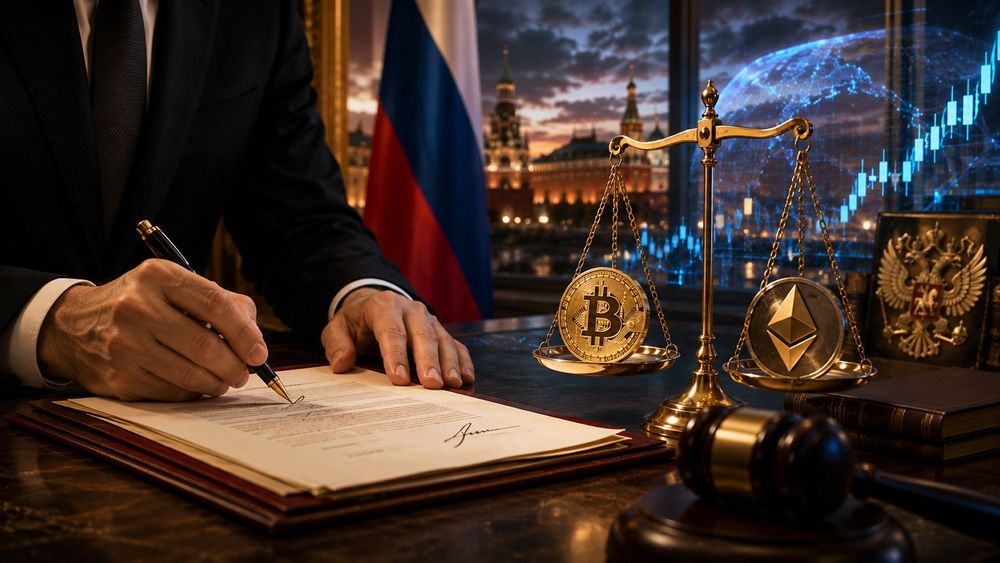
Crypto Recognised as Property: Putin Signs Russia's New Digital Currency Law
The document was published on the official legal acts portal as Federal Law No. 282-FZ of 4 August 2026. The State Duma passed it in second and third readings on 21 July, and the Federation Council approved it on 24 July. The central change is that digital currency now carries the legal status of property, allowing individuals and companies to own and dispose of it lawfully.
A second, accompanying act was signed alongside it, harmonising terminology across fifteen existing statutes - from banking and securities market law to anti-money-laundering rules, bankruptcy and currency controls.
Three Dates That Will Shape the Market
The law does not switch on all at once - the changes are spread across three deadlines:
- 1 September 2026 - the rules start for investors and venues, with an annual cap of 300,000 rubles for retail.
- 1 July 2027 - the licensing transition period ends and banks may block transfers to unauthorised services.
- 1 September 2027 - the 48-hour cooling rule kicks in.
1 September 2026: What Switches On First
Rules take effect for investors, exchange operators, trading venues and digital depositories. Non-qualified investors will be permitted to trade after passing a mandatory assessment and within an annual cap of 300,000 rubles - roughly $3,750 - through a single intermediary. Legal trading is confined to venues licensed by the Central Bank, while custody and record-keeping fall to digital depositories. That status will be available to existing securities-market depositories admitted to a dedicated Bank of Russia register.
Capital Requirements and Which Coins Get Admitted
Capital requirements are set firmly:
- 50 million rubles - the minimum for a digital depository.
- 100 million rubles - for entities working with foreign systems.
- 250 million rubles - for settlement depositories.
Only coins with a market capitalisation above 5 trillion rubles - around $62 billion - plus sufficient liquidity and a long pricing history will be admitted to trading. According to Vladimir Chistyukhin, First Deputy Governor of the Central Bank, bitcoin, ether and USDT meet those criteria, although stablecoins are not explicitly addressed in the text itself. Custody is permitted solely through custodial wallets; cold storage remains available only to participants in foreign trade activity.
Who Will Act as the Intermediary
Brokers and asset management companies from the securities market will act as intermediaries between venues and investors, and will also be allowed to help Russian clients interact with foreign crypto infrastructure. Depositories additionally take on full transaction record-keeping and the screening of clients for suspicious transfers.
1 July 2027: The Transition Period Ends
The transition period allotted for obtaining licences ends. After that date, Russian residents may transact in cryptocurrency only through authorised intermediaries, and banks gain the power to block transfers directed to unauthorised services.
1 September 2027: The 48-Hour Rule
A 48-hour cooling-off rule takes effect for transfers between wallets and to fiat accounts.
Self-Regulation: Exchange Operators Set Up an SRO
Self-regulation forms a separate track. Exchange operators intending to work legally are establishing a self-regulatory organisation for digital currency exchange operators, with a founding congress scheduled for 1 September in Moscow, as announced by Blockchain Life conference organiser Sergey Khitrov. Membership will be open to any participant, with no entry fee.
What the Bank of Russia Is Preparing Next
Ahead of the signing, the Bank of Russia had already published draft regulations of its own covering digital assets. Notably, the regulator intends to permit non-professional investors to trade on margin - that is, using borrowed funds. The framework statute is now in place, but the substance of the secondary legislation is still taking shape, and that is what will determine how workable the new structure proves to be.
When does Law 282-FZ take effect?
In stages. From 1 September 2026 the rules apply to investors, exchange operators, trading venues and digital depositories. On 1 July 2027 the transition period for obtaining licences ends. From 1 September 2027 a 48-hour cooling rule applies to transfers.
Is cryptocurrency now officially property in Russia?
Yes. The law gives digital currency the legal status of property, which allows individuals and companies to own and dispose of it lawfully.
How much can a non-qualified investor put in?
Up to 300,000 rubles a year - roughly $3,750 - through a single intermediary, and only after passing a mandatory assessment.
Which coins will be admitted to trading?
Coins with a market capitalisation above 5 trillion rubles - around $62 billion - plus sufficient liquidity and a long pricing history. According to First Deputy Governor of the Central Bank Vladimir Chistyukhin, bitcoin, ether and USDT meet those criteria.
Will cold wallets still be allowed?
Custody is permitted solely through custodial wallets. Cold storage remains available only to participants in foreign trade activity.
Crypto markets expert and head of content and marketing at EIDEX. Covers market structure, exchange infrastructure and cross-chain trading - turning on-chain data and market shifts into clear, actionable research for traders.