Crypto Exchange vs Exchanger: Key Differences Explained
When first exploring crypto, these terms seem identical since both swap money for digital assets. However, the distinction matters significantly-getting it wrong costs real money in unnecessary fees or wasted time.
Understanding the difference between an exchange and an exchanger saves both money and time. This guide covers the key differences and helps you select the right option for your situation.
What Is a Crypto Exchanger
An exchanger represents the simplest crypto swap service. You arrive, request a conversion (like swapping $200 for USDT), receive a quoted rate, and either accept or decline. There's no account creation, order book, or trading pairs involved.
The mechanism is straightforward: the exchanger maintains reserves in multiple currencies and swaps them at its own rate-the markup is how it earns. The rate locks at the transaction moment and the swap occurs instantly or nearly so.
A bitcoin exchanger lets you send fiat directly and receive BTC within minutes. No charts, order matching, or waiting required.
Main advantages include speed (deals close in 1-5 minutes), simplicity (no learning curve), low entry barriers (swap as little as $10), and often no KYC for small amounts.
The primary drawback is that the rate is always worse than market rates. The exchanger's spread typically runs 1-3% or higher-negligible on small amounts but painful on large ones.
What Is a Crypto Exchange
A cryptocurrency exchange operates differently. You're not buying crypto from the platform-you're trading with other people. The exchange simply serves as the marketplace connecting buyers and sellers.
Most popular platforms are centralized exchanges where the platform runs the order book and holds your funds during trading. As a crypto trading platform, it offers depth and pricing that no exchanger can match.
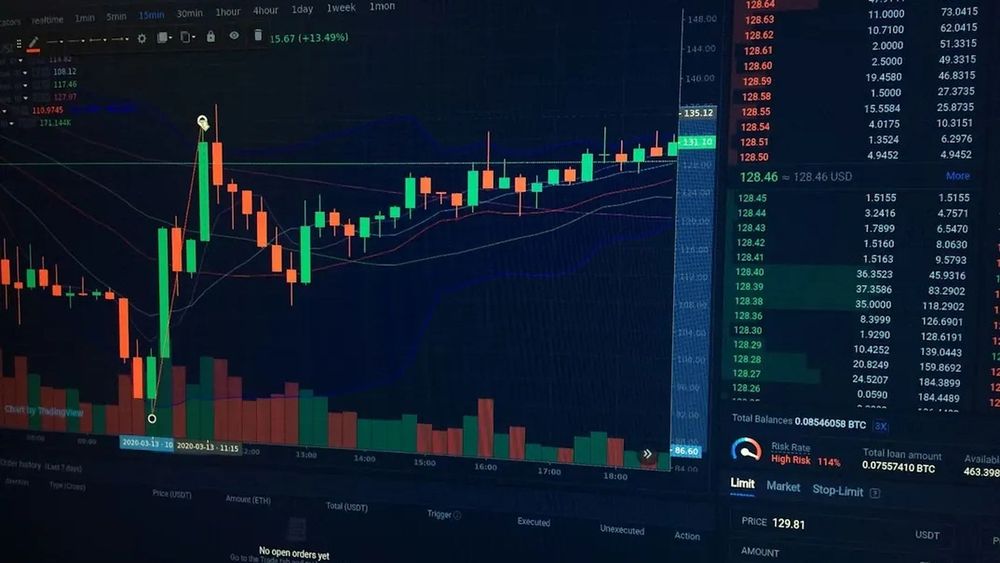
Every exchange centers on the order book-a live list of all active buy and sell orders. You can see someone wanting to buy BTC at $92,000 and another selling at $92,050. When a buyer and seller match, the trade executes.
Two order types matter most. A market order fills immediately at the current price-quick, but the final price may vary slightly, mainly in low-volume markets. A limit order lets you set your own price and wait. If ETH is at $3,000 and you want to buy at $2,800, place the order and it sits in the book until the market reaches that level.
Exchange vs Exchanger Crypto: Side by Side
Here's how the two tools compare across the most important factors. The core difference between exchange and exchanger comes down to one trade-off: exchangers sell convenience, exchanges sell price.
Rate: Exchange gives you market price. Exchanger adds a 1-3% markup.
Speed: Exchange depends on order type. Exchanger is instant.
Fee: Exchange charges 0.1-0.2% explicitly. Exchanger hides the fee in the rate.
Registration: Exchange requires KYC. Exchanger often skips it for small amounts.
Minimum: Exchange typically starts around $10-20. Exchanger accepts any amount.
Privacy: Exchange is low. Exchanger is higher.
Worried about privacy? Inside EIDEX you can also send and receive money without revealing any account number or wallet address - by username, a payment request, or a single E-Code. Here's how the EIDEX transfer system works.
Liquidity: Exchange is deep. Exchanger is limited by its reserves.
Which matters more depends entirely on your situation.
When to Use an Exchanger
An exchanger is the right tool when you need to move fast without friction. Need USDT quickly with dollars available? Exchanger.
Small amount where the rate difference isn't significant? Exchanger. No exchange account set up and need crypto today-verification takes hours? Exchanger handles it now.
Need a specific local payment method like a particular bank card? Exchangers specialize in exactly this. For amounts under $500, the rate gap is usually under $10-a small price for a fast, simple swap.
When to Use an Exchange
Switch to an exchange when volume or frequency makes the rate difference meaningful. Trading $5,000 monthly-saving 1-2% versus an exchanger means keeping $50-100 in your pocket every month.
Large single transaction above $2,000? The exchange rate advantage is immediate and clear. Need to set a limit order and buy during a dip? Exchangers cannot do this.
Need an altcoin beyond the top 10? Exchanges carry hundreds of pairs that no exchanger stocks.
Active traders benefit from additional exchange features: stop-loss orders, trading history, portfolio tracking, and access to futures markets. These capabilities simply do not exist in the exchanger model.
P2P-The Third Option People Forget
There is a middle layer between exchanges and exchangers that most beginners overlook-peer-to-peer exchange. These are direct deals between users, with the platform acting as escrow and guarantor.
P2P works best when you need to pay with cash, a local bank, or want rates close to market while paying in fiat. P2P rates tend to beat exchangers on price, but deals need more back-and-forth and carry some risk if the platform's escrow is weak.
In practice, the best platforms now combine all three tools under one roof. That is the exact model EIDEX is built on-spot exchange, P2P marketplace, and fiat-to-crypto conversion in one place. No need to juggle three separate accounts.
How to Choose: A Simple Framework
Start with transaction size. Under $500-exchanger wins on convenience. Over $2,000-exchange wins on rate. Between $500-$2,000-calculate both quotes before deciding.
Then consider your timeline. Need crypto in the next 10 minutes? Exchanger. Have time to wait for a limit order to fill? Exchange.
Finally, check payment method. Specific local bank or cash? P2P. If paying by standard card or bank transfer, both options work.
How to Get the Best Rate
Count the final amount, not the percentage. An exchange charges 0.2% but gives you market rate. An exchanger charges zero commission but hides 2% in the spread.
Which is better depends entirely on transaction size. Check both options-sometimes an exchanger offers a better deal, especially when markets move fast and exchange liquidity drops.
On exchanges, use limit orders to protect your execution price. A market order on a low-liquidity pair can fill at a worse price than expected.
Trade on EIDEX: Bitcoin (BTC) · Ethereum (ETH).
Can you lose money on an exchange but not an exchanger?
On an exchange you're trading-if you hold a position and price moves against you, yes. On an exchanger the deal is instant with no price exposure. That said, exchangers carry their own risk: choosing an untrustworthy service. Always check reputation before using any exchanger.
Do you need ID to use an exchange?
On most regulated exchanges, yes-KYC is mandatory. It is a legal requirement, not a choice the platform makes. Verification usually takes between 15 minutes and a day depending on the platform and your documents.
What are the actual fees-exchange vs exchanger?
Exchange: 0.1-0.2% of the trade, shown explicitly. Exchanger: 1-3% built into the rate, invisible. Below $500 the difference is minor. Above $5,000 the exchange wins clearly every time.
Can I use both an exchange and an exchanger?
Most experienced crypto users combine all three tools. Exchanger for fast small swaps. Exchange for active trading and larger amounts. P2P for cash deals and local payment methods.
Is a centralized exchange safe?
Good exchanges keep your funds separate, run regular checks, and many back holdings with insurance. Some risk always exists, but using well-known platforms with a clean track record keeps it low. Never keep more on an exchange than you need for active trading.
A bear market is a prolonged period of falling prices - typically defined as a 20%+ decline from recent highs - accompanied by widespread pessimism, reduced trading volume, and negative market sentiment.
DeFi (Decentralized Finance) is an open financial system built on blockchain that replicates banking services - lending, trading, earning yield - without banks, brokers, or any central authority.
Liquidity measures how easily a cryptocurrency can be bought or sold without significantly affecting its price.
Crypto markets expert and head of content and marketing at EIDEX. Covers market structure, exchange infrastructure and cross-chain trading - turning on-chain data and market shifts into clear, actionable research for traders.